
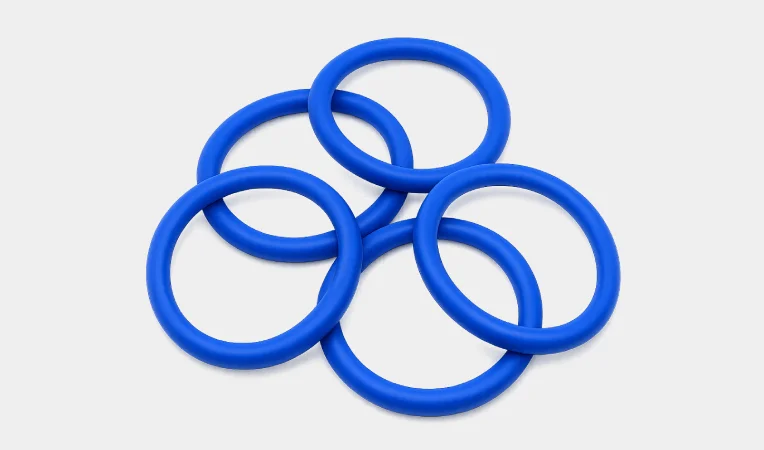
Silicone O-Rings
Silicone O-rings are flexible sealing components that fill the gap between mating surfaces to prevent gas or fluid leakage. This guide covers the advantages, common applications, and suitability for demanding environments, from automotive heat cycling to food-grade sanitary requirements in US industrial and commercial use.
Rubber Xpert Inc. serves as the go-to resource for sourcing and specifying silicone O-rings, guiding buyers through material grades, tolerances, and application-specific requirements.
Buy Silicone O-Rings in Bulk from a Trusted Manufacturer
& Supplier, Rubber Xpert Inc.
Rubber Xpert Inc. manufactures silicone O-rings built for bulk and custom purchasing. We offer custom sizes, consistent dimensional tolerances, and high-grade material quality in every batch.
Our manufacturing capabilities support OEM and industrial-scale requirements, providing a dependable source of silicone rubber O-rings at any volume.
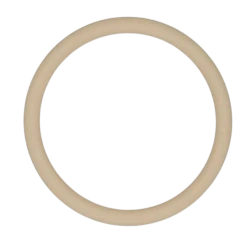
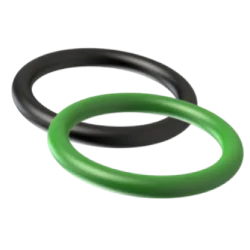
EPDM O-Rings
Weather- and steam-exposed sealing applications requiring ozone resistance and UV stability. Delivers dependable sealing in outdoor and water-service environments where petroleum oils are not present.
RING
01
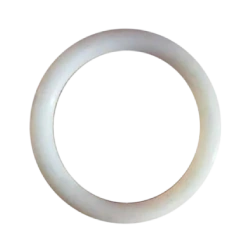
Neoprene O-Rings
Moderate oil sealing for outdoor and refrigerant-handling systems. Performs where mechanical durability and long-term flexibility are required.
RING
02
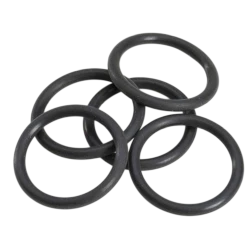
Fluorosilicone O-Rings
Fuel- and solvent-resistant sealing with thermal and hydrocarbon compatibility. Built for aerospace, automotive, and chemical fluid environments demanding stable performance.
RING
03
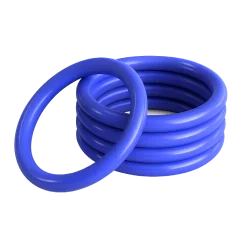
FKM O-Rings
Aggressive chemical and extreme heat sealing for petrochemical, automotive, and heavy industrial fluid systems. Maintains dimensional stability and sealing integrity under prolonged high-temperature exposure.
RING
04
HNBR O-Rings
Oil-, H2S-, and high-load-resistant seals engineered for dynamic sealing systems.
RING
05
Buna (NBR) O-Rings
Industry-standard petroleum-resistant seals for hydraulic and pneumatic systems.
RING
06
Polyurethane O-Rings
High-abrasion, extrusion-resistant dynamic seals performing reliably up to 80°C.
RING
07
Santoprene O-Rings
Thermoplastic rubber seals offering rubber-like flexibility with full plastic recyclability.
RING
08
Butyl Rubber O-Rings
Low-permeability, gas-retention seals built for airtight critical applications.
RING
09
Natural Rubber O-Rings
High-elasticity, high-tensile seals suited for low-pressure non-oil environments.
RING
10
AEM O-Rings
Hot-oil and transmission-fluid-resistant seals engineered for underhood automotive demands.
RING
11
Why Buy Silicone O-Rings from Rubber Xpert Inc.?
The reasons to buy silicone O-rings from Rubber Xpert Inc. are listed below.
- Quality Control: Operates under ISO 9001-certified quality management systems, testing each production run for dimensional and material compliance.
- Bulk Production: Scales output for OEM and industrial-volume orders without sacrificing batch-to-batch consistency.
- Custom Manufacturing: Producing O-rings to exact customer specifications, including non-standard sizes and cross-sections.
- Competitive Pricing:: Leveraging high-volume production capacity to deliver bulk pricing without compromising material quality.
- Certified Material Grades: Supplying compounds that meet FDA, NSF, and USP Class VI standards for food-grade and medical-grade applications.
- Experienced Engineering Team: Staffing engineers who guide material selection and design decisions based on application-specific demands.
- Flexible Order Volumes: Accommodating both small-batch prototyping runs and large-scale industrial orders on a single production line.
- End-to-End Support: Guiding customers from initial specification through prototyping, manufacturing, and final delivery.
What Are Silicone O-Rings?
Silicone O-rings are circular elastomer seals with a round cross-section that, when compressed, deform and fill the groove between two mating surfaces, blocking the passage of gas or fluid.
They handle extreme temperatures (-60°C to 230°C), resist UV, ozone, and weathering, and stay flexible in cold environments. Their main limitations are low tensile strength and poor abrasion resistance, so they are better suited to static seals than to dynamic or moving applications.
What Materials and Silicone Compounds Are Used to
Manufacture Silicone O-Rings?
Warning: Undefined array key "rubber_product_material_main_desc" in /home/u221192900/domains/rubberxperts.com/public_html/wp-content/themes/rubberexperts/templates/sub-product-details-template-new.php on line 374
The materials and silicone compounds used to manufacture silicone O-rings are synthetic elastomers composed of a silicon-oxygen backbone. They are mixed with the base to form formulations suited to different hardness and resistance requirements.
General-purpose compounds cover standard static seals, while high-temperature grades resist compression set under sustained heat. Food-grade and medical-grade variants meet sanitary or biocompatibility standards for use in food and healthcare applications.
Silicone O-Rings Material Comparison Table
The Silicone O-Rings material comparison is shown in the table below.
| Compound Type | Temperature Range | Flexibility | Chemical Resistance | Regulatory Suitability | Typical Applications | Key Limitations |
|---|---|---|---|---|---|---|
| General-Purpose Silicone | -60°C to 200°C | High. Stays pliable in cold | Fair. Weak against fuels and solvents | None specific. Standard industrial use | HVAC seals, enclosures, weatherproofing | Poor abrasion and tear resistance |
| High-Temperature Silicone | -50°C to 230°C | Fair. Stiffens slightly at peak heat | Good against oxidation and ozone | None specific. Built for heat cycling | Oven gaskets, engine bay seals, exhaust components | Higher cost. Limited fuel resistance |
| Food-Grade Silicone | -60°C to 200°C | High | Resists mild acids, oils, cleaning agents | FDA-compliant, NSF-listed | Beverage lines, food processing equipment, kitchen seals | Not rated for implants or surgical use |
| Medical-Grade Silicone | -60°C to 200°C | High | Resists bodily fluids, sterilization chemicals | USP Class VI, ISO 10993 biocompatible | Implants, catheters, medical device seals | High cost. Needs certified sourcing |
| Fluorosilicone | -55°C to 175°C | Fair | Strong against fuels and solvents | Common in aerospace and automotive specs | Fuel system seals, aircraft components | Poor abrasion resistance. Costly |
How to Choose the Right Silicone O-Ring for Your Needs?
Choosing the right silicone O-ring depends on matching material properties to your application's specific demands.
- Size and Cross-Section: Match inner diameter, outer diameter, and cross-section to the groove exactly. Incorrect sizing causes leaks or early failure.
- Hardness (Durometer): Silicone durometer typically ranges from 40 to 80 Shore A. Lower durometer values suit static seals, and higher durometer values handle dynamic pressure.
- Temperature Requirements: Silicone handles extreme heat and cold well. Standard rubber grades work fine for moderate ranges at lower cost.
- Pressure Conditions: High pressure needs tighter tolerances and firmer compounds to resist extrusion. Low pressure allows softer silicone grades.
- Media Compatibility: Match the compound to the fluids or gases it contacts. Silicone struggles with fuels and solvents.
- Compression Set: Compression measures a seal's ability to hold its shape under sustained pressure. Silicone performs well here, resisting long-term leaks.
- Regulatory Requirements: Food and medical uses require certified compounds, like FDA-compliant or USP Class VI silicone.
- Operating Environment: Outdoor installations benefit from silicone's UV and ozone resistance. Enclosed settings allow broader material choices.
Where Are Silicone O-Rings Commonly Used?
Silicone O-rings are selected across industries because their heat resistance, flexibility, and purity meet each sector's specific sealing demands.
Automotive
O-rings seal engine components, fuel injectors, brake systems, and transmission housings against heat. Silicone O-rings support the automotive industry by providing seals for turbocharger housings, coolant lines, and HVAC ductwork exposed to extreme temperature swings.
Electronics
Moisture, dust, and static buildup threaten connectors and circuit housings in outdoor or sealed enclosures. The electronics industry relies on silicone O-rings for waterproof casings, LED fixtures, and junction boxes facing temperature extremes.
Industrial Machinery
Pumps, hydraulic cylinders, and rotary shaft housings are subject to constant pressure cycling and ozone exposure. Compressor gaskets and flange connections in the industrial and machinery sector depend on silicone O-rings for long-term outdoor durability.
Food & Beverage Processing
Bottling equipment, mixing tanks, and pasteurization lines undergo sanitation and caustic washdowns. FDA-compliant silicone O-rings keep food processing systems sealed in CIP-compatible fittings and aseptic packaging.
Medical & Healthcare Equipment
Implants, catheters, and diagnostic devices require biocompatible seals that withstand repeated sterilization cycles. The medical industry depends on platinum-cured silicone O-rings for surgical instruments, drug delivery systems, and dialysis equipment.
HVAC & Refrigeration
Compressors, valves, and refrigerant lines cycle through extreme hot and cold conditions daily. The HVAC industry relies on silicone O-rings for condenser seals, ductwork joints, and refrigerant containment under thermal stress.
Marine & Outdoor Environments
Harsh saltwater exposure, UV radiation, and constant weathering demand seals that resist degradation. The military industry uses silicone O-rings in vehicle components, outdoor equipment housings, and marine hardware facing extreme environmental conditions.
Key Features & Benefits of Silicone O-Rings
Silicone O-rings stand out through properties that solve real sealing challenges across harsh operating conditions.
Excellent Temperature Resistance
O-rings withstand temperatures from -60°C to 230°C without compromising sealing ability. This makes it reliable for engine bays, ovens, and other high-heat equipment.
Wide Temperature Capability
Silicone stays functional across extreme heat and deep cold. The range suits applications like aerospace components and outdoor refrigeration units.
Flexible and Elastic Performance
Silicone maintains pliability and quickly returns to its original shape after compression. The elasticity keeps seals tight in fittings, valves, and connector housings.
Excellent Weather and UV Resistance
Silicone resists ozone, sunlight, and moisture without cracking or hardening over time. Outdoor and marine equipment benefit from this durability in the face of constant weathering.
Excellent Weather and UV Resistance
Silicone resists ozone, sunlight, and moisture without cracking or hardening over time. Outdoor and marine equipment benefit from this durability in the face of constant weathering.
Consistent Sealing Performance
Silicone holds stable dimensions and compression set across repeated thermal cycles. The consistency prevents leaks in HVAC systems and industrial machinery under fluctuating conditions

Frequently Asked Questions
Here are answers to common questions about silicone O-ring performance, maintenance, and selection.
Silicone O-rings last 10 to 20 years in static, moderate-temperature applications when properly installed. Service life drops under continuous high heat, UV exposure, or repeated compression cycling in dynamic seals.
Yes, silicone O-rings can be reused after removal if they show no cuts, flat spots, or permanent compression set. Reuse in critical or high-pressure applications carries higher risk, so inspection before reinstallation stays essential.
Silicone O-rings can be manufactured to tolerances as tight as ±0.05mm for standard sizes, depending on cross-section and production method. Custom or high-precision applications require even tighter dimensional control during molding.
Yes, silicone O-rings suit high-temperature applications, withstanding continuous exposure up to 230°C without losing shape or sealing performance. HTV silicone grades handle heat cycling well in engine bays, ovens, and industrial equipment.
Silicone O-ring failure results from chemical incompatibility, excessive compression set, or exposure to fuels and solvents it cannot resist. Improper installation (twisting or pinching) in assembly leads to early leaks and seal breakdown.
Need Custom O-Rings for Your Application?
Tell us your size, material, quantity or application requirements and our team will provide a competitive quote.
Materials
Manufacturing
& Fast Response
You can upload it with your enquiry.