
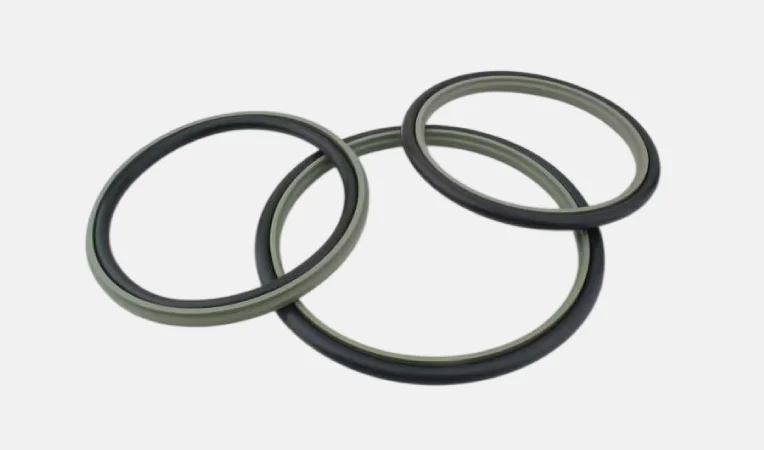
Polyurethane O-Rings
Polyurethane O-rings are flexible, torus-shaped seals that fill the gap between mating surfaces to block the passage of fluid or gas under compression. Polyurethane O-rings are known for high abrasion resistance, strong load-bearing capacity, and performance under pressure.
Rubber Xpert Inc. manufactures and supplies the O-rings in the USA, giving buyers a durable, application-matched sealing solution backed by consistent quality and custom sizing.
Buy Polyurethane O-Rings in Bulk from a Trusted Manufacturer
Supplier, Rubber Xpert Inc.
Rubber Xpert Inc. runs in-house molding capacity built for bulk production, using certified AU and EU polyurethane compounds that hold hardness and tensile strength batch after batch. Every order is produced to tight dimensional tolerances, with custom sizes ranging from small seals under 10mm ID to large industrial rings over 500mm ID.
Custom cross-sections and dash sizes are molded to non-standard grooves, giving OEM and industrial buyers a rubber O-ring they specify once and reorder with confidence.
Silicone O-Rings
Flexible sealing for wide temperature swings and food, medical, or outdoor exposure.
RING
01
EPDM O-Rings
Weather-resistant sealing built for water, steam, and outdoor system durability.
RING
02
Neoprene O-Rings
Durable general-purpose sealing with reliable resistance to oils and moderate chemicals.
RING
03
Fluorosilicone O-Rings
Fuel- and oil-resistant sealing for aerospace and low-temperature performance needs.
RING
04
HNBR O-Rings
High-performance sealing for demanding oil, fuel, and abrasion-heavy environments.
RING
05
Buna (NBR) O-Rings
Cost-effective sealing with strong resistance to petroleum-based fluids.
RING
06
Santoprene O-Rings
Thermoplastic elastomer sealing suited for water systems and outdoor durability.
RING
07
Butyl Rubber O-Rings
Low-permeability sealing built for vacuum systems and gas-tight applications.
RING
08
Natural Rubber O-Rings
High-elasticity sealing with excellent tear strength for mechanical flexing applications.
RING
09
AEM O-Rings
Heat- and ozone-resistant sealing engineered for demanding automotive drivetrain use.
RING
10
Why Buy Polyurethane O-Rings from Rubber Xpert Inc.?
The reasons to buy Polyurethane O-rings from Rubber Xpert Inc. are listed below.
- Custom Manufacturing: Rubber Xpert Inc. produces Polyurethane O-rings in non-standard dimensions and profiles built to groove and equipment specifications.
- Material Selection: Polyester-based (AU) and polyether-based (EU) formulations for moisture and chemical exposure needs.
- Dimensional Accuracy: Precision tooling maintains tight tolerances on inner diameter, cross-section, and concentricity.
- Quality Control: Batch testing verifies tensile strength and compression set before shipment.
- Bulk Production: High-volume capacity supports large orders without compromising lead times.
- Specification-to-Delivery Support: Technical staff assists from initial inquiry through final shipment.
What Are Polyurethane O-Rings?
Polyurethane O-rings are torus-shaped seals made from polyester (AU) or polyether (EU) polyurethane. The round cross-section deforms to fill the gap between mating surfaces, blocking fluid or gas at the contact points when compressed inside a properly sized groove.
They offer high tensile strength, strong abrasion resistance, and good load-bearing capacity, but limited resistance to steam, strong acids or alkalis, and prolonged heat or moisture exposure.
What Materials and Polyurethane (PU) Compounds Are Used to
Manufacture Polyurethane O-Rings?
Warning: Undefined array key "rubber_product_material_main_desc" in /home/u221192900/domains/rubberxperts.com/public_html/wp-content/themes/rubberexperts/templates/sub-product-details-template-new.php on line 374
Polyurethane O-rings are made from a polyester (AU) or polyether (EU) base elastomer. General-purpose AU grades handle dry, oil-exposed conditions with high abrasion resistance and tensile strength, while high-temperature EU grades resist hydrolysis and hold up better under sustained heat and moisture.
Food-grade and medical-grade options are limited, since polyurethane does not meet FDA or USP Class VI standards like silicone or FKM, which are used instead when certifications are required.
Polyurethane O-Rings Material Comparison Table
Polyurethane O-rings material comparison is shown in the table below.
| Compound Type | Temperature Capability | Flexibility | Chemical Resistance | Regulatory Suitability | Typical Applications | Key Limitations |
|---|---|---|---|---|---|---|
| Polyester-based (AU) | -30°C to 100°C | Moderate, and Stiffens at low temps | Strong resistance to oils, greases, and hydraulic fluids. Poor against water and steam | No FDA or USP Class VI certification | Hydraulic cylinders, heavy machinery, pneumatic seals | Degrades under sustained moisture or humidity (hydrolysis) |
| Polyether-based (EU) | -30°C to 110°C | Moderate and more stable across temp range | Resists hydrolysis and microbial growth. Moderate oil resistance | No FDA or USP Class VI certification | Wet or humid hydraulic systems, outdoor equipment, mining gear | Lower abrasion resistance than AU in dry, high-friction use |
Note: Polyurethane compounds (AU and EU) are not certified for food or medical use.
How to Choose the Right Polyurethane O-Ring for Your Needs?
Selecting a Polyurethane O-ring means matching compound, size, and rating to your actual operating conditions before placing an order.
To choose the right Polyurethane O-ring for your needs, follow the eight steps below.
- Size and Cross-Section: Verify inner diameter, outer diameter, and cross-section against your groove dimensions, since undersized or oversized rings cause leaks or premature wear.
- Hardness (Durometer): Choose a durometer based on your pressure load and surface finish. Softer grades seal better on rough surfaces, while harder grades resist extrusion at high pressure.
- Temperature Range: Confirm your operating temperature stays within -30°C to 110°C, since polyurethane loses flexibility and seal integrity outside this range.
- Pressure Rating: Match cross-section thickness and durometer to your system pressure, as higher pressures demand firmer compounds to prevent extrusion into the gland gap.
- Media Compatibility: Match your fluid exposure to AU or EU resistance. AU handles oils well in dry conditions, while EU holds up better against moisture and hydrolysis.
- Compression Set: Check the compound's compression set rating, since a ring that does not rebound after prolonged compression loses sealing force over time.
- Regulatory Requirements: Confirm certification needs before ordering, since standard polyurethane grades do not meet FDA or USP Class VI standards for food or medical use.
- Operating Environment: Factor in UV exposure, humidity, and ambient conditions, since prolonged outdoor or wet exposure affects AU grades more than EU.
Where Are Polyurethane O-Rings Commonly Used?
Polyurethane O-rings are selected across industries where high pressure, abrasion, and heavy loads would quickly wear out standard rubber seals.
The industries relying on polyurethane O-rings are outlined below.
Hydraulic Systems
Polyurethane O-rings seal cylinders, pumps, and valves in hydraulic systems because the compound resists extrusion and holds a tight seal under sustained high-pressure load.
Pneumatic Systems
Polyurethane O-rings seal actuators and control valves in pneumatic systems. The abrasion resistance sustains repeated piston movement and rapid cycling.
Industrial Machinery
Polyurethane O-rings seal moving components in industrial machinery. The resistance to friction and mechanical stress outlasts standard elastomers in continuous operation.
Construction Equipment
Polyurethane O-rings seal hydraulic joints and cylinders in construction equipment, because their load-bearing capacity resists the heavy stress and abrasive debris common on job sites.
Mining Equipment
Polyurethane O-rings seal hydraulic and pneumatic components in mining equipment, since their abrasion resistance holds up against constant exposure to abrasive particulates.
Agricultural Machinery
Polyurethane O-rings seal hydraulic cylinders and pumps in agricultural machinery. The durability withstands the dust, debris, and heavy loads typical of field operation.
Material Handling Equipment
Polyurethane O-rings seal lifting and conveying components in material handling equipment, since their high load-bearing capacity supports repeated heavy-duty cycling without premature wear.

Frequently Asked Questions About
Polyurethane O-rings
Common questions about polyurethane O-ring properties and application help buyers select the right seal for their system.
Polyurethane O-rings are synthetic elastomer seals made from polyester- or polyether-based polyurethane. The key properties include high tensile strength, excellent resistance, and load-bearing capacity.
The temperature range for Polyurethane O-rings is -30°C to 110°C (-22°F to 230°F). Performance varies by grade, with some polyether-based formulations tolerating wider swings, but consistent exposure above the range accelerates hardening and cracking.
The chemical and oil compatibility of Polyurethane O-rings includes petroleum-based oils, greases, hydraulic fluids, and fuels, making them a common choice in hydraulic and pneumatic systems.
Polyurethane O-rings outperform standard rubber O-rings in abrasion resistance, tensile strength, and load-bearing capacity, allowing them to handle higher pressures without extruding.
Polyurethane also resists cutting, tearing, and wear far better, extending service life in high-friction or heavy-duty applications.
You should not use Polyurethane O-rings in applications involving sustained exposure to steam, strong acids or alkalis, or temperatures above their rated range, as the conditions cause rapid degradation.
The primary applications and industries that use Polyurethane O-rings are hydraulic cylinders, heavy machinery, mining equipment, and pneumatic systems where high pressure is critical.
Industries relying on it include construction, manufacturing, oil and gas, and industrial automation.
Polyester-based (AU) polyurethane O-rings offer higher tensile strength and oil resistance, making them well-suited for dry, high-load conditions, while polyether-based (EU) polyurethane O-rings provide resistance to hydrolysis, moisture, and microbial attack.
To properly install Polyurethane O-rings to prevent damage, lubricate the ring and mating surfaces to reduce friction, avoid sharp edges or threads that nick the material during assembly, and ensure correct groove sizing to prevent overstretching.
Use installation tools instead of sharp objects, and check for proper seating to prevent premature failure.
Need Custom O-Rings for Your Application?
Tell us your size, material, quantity or application requirements and our team will provide a competitive quote.
Materials
Manufacturing
& Fast Response
You can upload it with your enquiry.