
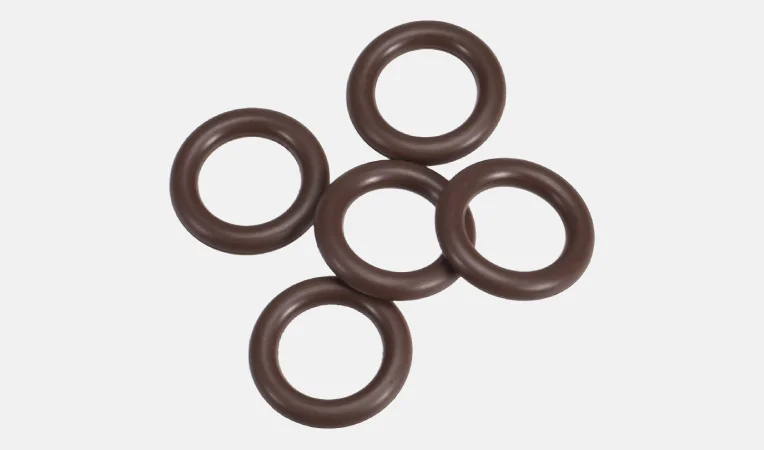
Neoprene O-Rings
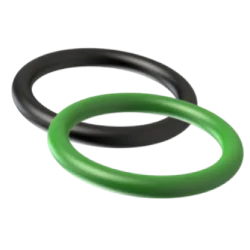
Neoprene O-rings are chloroprene-based elastomeric seals to prevent fluid and gas leakage between mating surfaces across industrial, automotive, marine, and outdoor applications. Neoprene O-rings deliver dependable sealing performance in environments where standard elastomers fall short, known for their resistance to weathering, ozone, refrigerants, and moderate oils.
At Rubber Xpert Inc., we supply and manufacture neoprene O-rings to exact specifications serving OEM buyers, engineers, and procurement teams in the USA with material quality, custom sizing, and bulk production capabilities. Whether you are sourcing for a specific application or evaluating sealing materials, this guide covers everything needed to make the right neoprene O-ring selection.
Buy Neoprene O-Rings in Bulk from a Trusted Manufacturer
& Supplier, Rubber Xpert Inc.
Rubber Xpert Inc. supplies neoprene O-rings for bulk orders and custom specifications. Every O-ring is produced using high-grade neoprene compounds, ensuring consistent sealing performance in OEM and industrial applications.
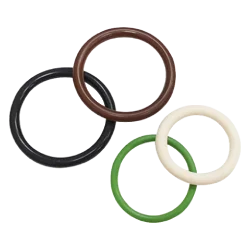
Our manufacturing capabilities are built to meet your volume and requirements, whether you need standard sizes or fully custom dimensions, and are backed by a complete line of rubber O-rings.
Silicone O-Rings
High-purity inert sealing that maintains dimensional stability during extreme thermal cycles in food, medical, and industrial process environments.
RING
01
EPDM O-Rings
Durable outdoor sealing resisting ozone degradation, UV exposure, and pressurized steam in water and climate-control systems.
RING
02
Fluorosilicone O-Rings
Fuel-tolerant sealing that preserves elastic integrity in aerospace and automotive fluid-contact environments.
RING
03
FKM O-Rings
Chemical-grade sealing for prolonged exposure to concentrated process fluids and sustained operating temperatures.
RING
04
HNBR O-Rings
Tough, abrasion-resistant sealing for continuous mechanical wear in oil-field drilling and refrigerant environments.
RING
05
Buna (NBR) O-Rings
Nitrile sealing maintains fluid resistance in automotive, industrial, and oil-handling systems under moderate temperatures.
RING
06
Polyurethane O-Rings
Pressure-rated sealing with cut-and-tear resistance for heavy-load dynamic applications in construction and mining equipment.
RING
07
Santoprene O-Rings
Weatherproof thermoplastic sealing combining long-term UV stability with consistent compression recovery for outdoor and consumer-grade systems.
RING
08
Butyl Rubber O-Rings
Chemical-inert gas-barrier sealing for vacuum, pharmaceutical, and high-purity containment systems requiring zero permeation tolerance.
RING
09
Natural Rubber O-Rings
Premium elastic sealing delivering rebound and fatigue resistance for low-pressure mechanical and water-contact applications.
RING
10
AEM O-Rings
Drivetrain-grade sealing resisting thermal degradation and fluid swell in automatic transmission and lubrication systems.
RING
11
Why Buy Neoprene O-Rings from Rubber Xpert Inc.?
The reasons to buy neoprene O-rings from Rubber Xpert Inc. are listed below.
- Custom Manufacturing: Neoprene O-rings are produced to client-specified dimensions and compound grades outside standard catalog sizes.
- Material Selection Support: Engineers recommend neoprene grades based on chemical exposure, temperature range, and mechanical load requirements.
- Dimensional Accuracy: Each batch is verified for cross-section diameter, inner diameter, and compliance with tolerances before shipment.
- Quality Control Process: In-process and final inspections cover hardness, compression set, and surface integrity across every production run.
- Bulk Production Capacity: Manufacturing lines support high-volume orders with consistent material properties and dimensional repeatability.
- Specification-to-Delivery Support: Technical staff guides buyers from requirement definition through prototyping, production, and final delivery.
What Are Neoprene O-Rings?
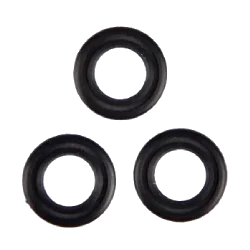
Neoprene O-rings are circular elastomeric seals manufactured from chloroprene rubber, with a round cross-section that deforms under compression inside a machined groove to create a fluid- and gas-tight barrier between mating surfaces.
Key properties include weather, ozone, and flame resistance with moderate oil tolerance, but performance is limited in concentrated petroleum-based fluids and highly aggressive chemical environments.
What Materials and Neoprene (CR) Compounds Are Used to
Manufacture Neoprene O-Rings?
Neoprene O-rings use chloroprene rubber (CR) as the base elastomer, compounded with carbon black, plasticizers, and curing agents to meet specific hardness and chemical resistance requirements. General-purpose, high-temperature, food-grade, and medical-grade formulations are available depending on requirements.
Food-grade and medical-grade compounds meet FDA and USP compliance standards, while high-temperature grades maintain compression set resistance beyond standard CR operating limits.
Neoprene O-Rings Material Comparison Table
The Neoprene O-rings material comparison table is shown below.
| Material | Temperature Range | Hardness (Shore A) | Media Compatibility | Best For |
|---|---|---|---|---|
| Neoprene (CR) | -40°C to 120°C | 40-90 | Water, air, refrigerants, mild chemicals | General industrial and HVAC sealing |
| EPDM | -50°C to 150°C | 40-90 | Steam, hot water, ozone, UV exposure | Outdoor and water-service applications |
| Silicone (VMQ) | -60°C to 230°C | 20-80 | Extreme heat, food media, dry environments | High-temp and food-grade sealing |
| FKM (Viton®) | -20°C to 200°C | 60-90 | Aggressive chemicals, fuels, acids | Chemical and high-temperature systems |
| Buna-N (NBR) | -40°C to 120°C | 40-90 | Petroleum oils, fuels, hydraulic fluids | Oil and fuel contact applications |
| HNBR | -40°C to 150°C | 50-90 | Oils, refrigerants, abrasive media | Oil field and refrigerant systems |
| Butyl (IIR) | -40°C to 120°C | 40-80 | Gases, steam, moisture, mild chemicals | Gas retention and airtight sealing |
How to Choose the Right Neoprene O-Ring for Your Needs?
Selecting the correct neoprene O-ring requires a thorough review of the application conditions before finalizing any specification. The selection criteria are outlined below.
- Size and Cross-Section: Verify that the inner and outer diameters and other measurements align with specifications, as undersized or oversized seals compromise compression and sealing.
- Hardness (Durometer): Select a Shore A hardness between 40 and 90 based on system pressure and surface finish, using softer grades in high-pressure environments.
- Temperature Range: Confirm neoprene's operating range of -40°C to 120°C covers the application's minimum and maximum thermal exposure, including intermittent temperature spikes.
- Pressure Rating: Evaluate system pressure against design and cross-section size, as higher pressures require harder compounds to prevent extrusion.
- Media Compatibility: Verify neoprene's suitability against the specific fluid or gas present, as it performs well with water, refrigerants, and mild chemicals but degrades in concentrated petroleum oils.
- Compression Set Requirements: Assess long-term sealing needs, as neoprene with low compression set values maintains sealing force without permanent deformation.
- Regulatory Requirements: Specify food-grade or medical-grade neoprene compounds where FDA or USP compliance is required for direct or incidental contact with consumable or pharmaceutical media.
- Operating Environment: Neoprene performs reliably in outdoor, marine, and refrigerant environments, but FKM, EPDM, or silicone are more appropriate where aggressive chemical exposure or contact exceeds neoprene's material limits.
Where Are Neoprene O-Rings Commonly Used?
Neoprene O-rings are selected across multiple industries for their resistance to weathering, moderate exposure to oils and refrigerants, and mechanical stress.
Automotive
Cooling system hoses, fuel line connections, and underhood assemblies rely on neoprene O-rings across automotive industry applications where fluid and weather resistance are required.
HVAC & Refrigeration
Refrigerant lines, compressor fittings, and climate control connections depend on neoprene sealing in HVAC industry systems where thermal stability and refrigerant compatibility are critical.
Industrial Machinery
Hydraulic fittings, pneumatic assemblies, and rotating equipment benefit from neoprene's mechanical sealing properties in industrial and machinery environments operating under continuous pressure.
Marine Equipment
Saltwater exposure, UV radiation, and ozone degradation make neoprene the preferred sealing material for military industry including deck fittings, underwater housings, and fluid transfer connections.
Electrical & Electronics
Junction boxes, enclosure gaskets, and connector assemblies in electronics industry installations use neoprene O-rings to block moisture and weather ingress.
Construction Equipment
Outdoor UV exposure, ozone contact, and mechanical stress in hydraulic cylinders and fluid couplings make neoprene a sealing choice for heavy construction equipment.
General Manufacturing
Process equipment, fluid handling systems, and assembly line machinery in general manufacturing operations depend on neoprene O-rings for consistent all-purpose sealing performance.

Frequently Asked Questions About Neoprene O-rings
Common questions about neoprene O-ring properties, performance, and applications are answered below.
The main benefits of using Neoprene O-rings are weather resistance, ozone stability, moderate oil tolerance, flame retardancy, and reliable mechanical strength. The properties make neoprene a dependable sealing material in outdoor, refrigerant, and light petroleum-contact applications.
The temperature operating range for Neoprene O-rings is -40°C to 120°C under standard compound formulations. Specialty high-temperature grades extend upper limits to approximately 150°C for more demanding thermal environments.
Yes, Neoprene O-rings are resistant to oils and fuels at moderate concentration levels, tolerating refrigerant oils, greases, and light petroleum products without significant swell.
Concentrated petroleum fuels and aggressive hydrocarbon solvents exceed neoprene's chemical resistance limits, where FKM or NBR compounds are more appropriate.
The industries and applications that commonly use Neoprene O-rings include automotive cooling systems, HVAC and refrigeration equipment, marine fittings, electrical enclosures, and outdoor industrial machinery.
The balanced weathering and mechanical properties make them a sealing material in both light and heavy-duty environments.
Neoprene O-rings perform better outdoors compared to Buna-N (NBR) due to superior ozone resistance and UV stability that prevent surface cracking in exposed installations.
NBR degrades faster under prolonged outdoor exposure, making neoprene the preferred choice for exterior sealing applications where weathering is a primary concern than Buna-N O-ring.
EPDM O-rings are primarily used in automotive coolant systems, HVAC equipment, food processing lines, potable water infrastructure, and medical sterilization equipment. The regulatory-compliant formulations support general-purpose and specialty sealing requirements.
Yes, food-grade and drinking-water-certified EPDM O-rings are available in formulations that comply with FDA 21 CFR 177.2600 and NSF/ANSI 61 for potable water systems. The compounds are formulated to minimize extractables for food processing, beverage handling, and municipal water distribution applications.
Need Custom O-Rings for Your Application?
Tell us your size, material, quantity or application requirements and our team will provide a competitive quote.
Materials
Manufacturing
& Fast Response
You can upload it with your enquiry.