
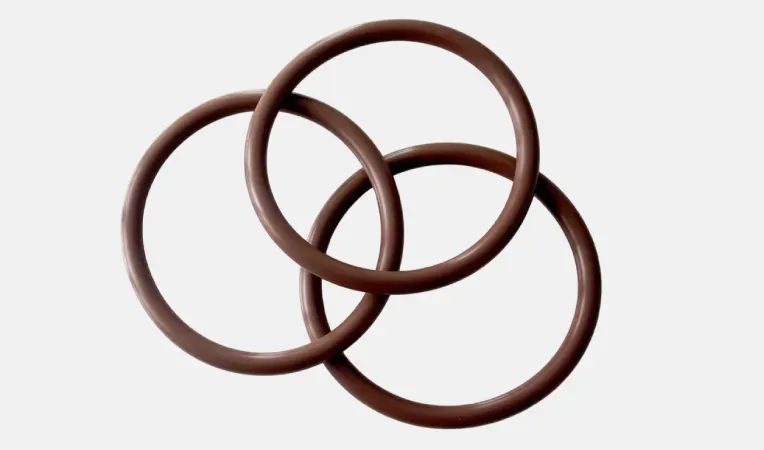
Santoprene O-Rings
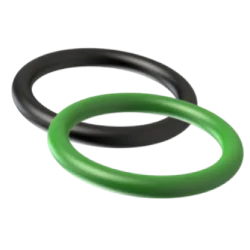
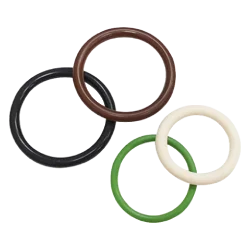
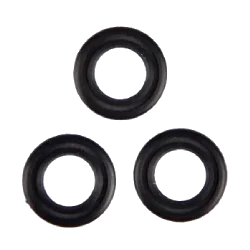
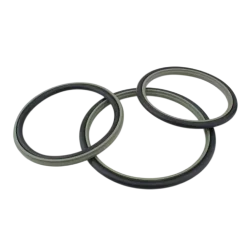
Santoprene O-rings are flexible thermoplastic vulcanizate (TPV) seals to prevent leakage between mating surfaces under pressure, heat, and repeated compression cycles. The rubber-like elasticity and thermoplastic durability suit automotive, HVAC, plumbing, and industrial applications where standard rubber seals fall short.
Rubber Xpert Inc. stands as a trusted USA manufacturer of Santoprene O-rings, providing high-quality materials for buyers who need dependable seals for different environments.
Buy Santoprene O-Rings in Bulk from a Trusted Manufacturer
& Supplier, Rubber Xpert Inc.
Rubber Xpert Inc. manufactures Santoprene O-rings with dimensional accuracy and material quality in every production batch, supporting bulk orders for OEM and industrial buyers.
Custom sizes, durometer grades, and cross-sections are molded to exact customer specifications, giving procurement teams a source for large-volume runs. Every rubber O-ring order is backed by strict quality control from specification through delivery, whether sourcing standard AS568 sizes or specialized dimensions.
Silicone O-Rings
High-temperature stability with flexibility for demanding static seal applications.
RING
01
EPDM O-Rings
Outstanding weather and steam resistance for outdoor and water-based sealing systems.
RING
02
Neoprene O-Rings
Balanced chemical and weather resistance with built-in flame retardance for general-purpose sealing.
RING
03
Fluorosilicone O-Rings
Wide-temperature fuel and oil resistance built for demanding aerospace static seals.
RING
04
HNBR O-Rings
High tensile strength and superior oil resistance built for demanding dynamic applications.
RING
05
Buna (NBR) O-Rings
Cost-effective oil and fuel resistance built for general-purpose hydraulic and pneumatic sealing.
RING
06
Polyurethane O-Rings
High abrasion and extrusion resistance built for dynamic sealing loads.
RING
07
Butyl Rubber O-Rings
Low gas permeability with strong resistance to polar fluids for vacuum and brake systems.
RING
08
Natural Rubber O-Rings
High-elasticity sealing with tear strength for mechanical flexing applications.
RING
09
AEM O-Rings
Balanced heat and hot-oil resistance built for demanding automotive underhood sealing.
RING
10
Why Buy Santoprene O-Rings from Rubber Xpert Inc.?
The reasons to buy Santoprene O-rings from Rubber Xpert Inc. are listed below.
- Custom Manufacturing: Molding is done to exact compound, cross-section, and durometer specifications set by the customer.
- Material Selection: Grade recommendations account for temperature, chemical, and flex-fatigue requirements specific to the application.
- Dimensional Accuracy: Tight tolerances are held using CMMs and optical comparators checked against AS568 standards.
- Quality Control: Production runs under an ISO 9001:2015-certified system with batch traceability and durometer verification.
- Bulk Production: Output scales for high-volume orders while part-to-part consistency stays intact.
- Support from Specification through Delivery: Assistance covers material consultation through final shipment and documentation.
What Are Santoprene O-Rings?
Santoprene O-rings are circular seals made from a thermoplastic vulcanizate (TPV) blend of polypropylene and EPDM rubber, combining rubber-like elasticity with thermoplastic processability. The round cross-section deforms under compression inside a matched groove, filling surface irregularities on mating faces to block fluid or gas passage.
The material resists heat, ozone, and a range of chemicals while retaining flexibility and low compression set in repeated cycles. Limited resistance to petroleum oils and hydrocarbons restricts its use in fuel or hydraulic-oil environments.
What Materials and Santoprene (TPV) Compounds Are Used to
Manufacture Santoprene O-Rings?
Warning: Undefined array key "rubber_product_material_main_desc" in /home/u221192900/domains/rubberxperts.com/public_html/wp-content/themes/rubberexperts/templates/sub-product-details-template-new.php on line 374
The materials and Santoprene (TPV) compounds that are used to manufacture Santoprene O-rings are built on polypropylene and EPDM rubber as the base elastomer. General-purpose grades suit standard industrial sealing, while high-temperature formulations extend service life under sustained heat exposure, and food-grade compounds meet FDA and NSF requirements for contact with consumables.
Medical-grade variants add USP Class VI and ISO 10993 compliance for devices and pharmaceutical equipment, and selecting the right materials for manufacturing ensures the finished O-ring matches its intended operating environment.
Santoprene O-Rings Material Comparison Table
The Santoprene O-rings material comparison is shown in the table below.
| Compound Type | Temperature Capability | Flexibility | Chemical Resistance | Regulatory Suitability | Typical Applications | Key Limitations |
|---|---|---|---|---|---|---|
| General-Purpose | -40°C to 135°C | High, 35A-50D | Ozone/acid resistant, poor oil resistance | Standard OEM specs | Weather seals, gaskets, grommets | Weak against petroleum oils |
| High-Temperature | Up to 150°C | High, low compression set | Improved oxidative stability | Automotive underhood specs | Engine bay seals, HVAC seals | Not fuel-compatible |
| Food & Water Contact | -40°C to 135°C | Comparable to general-purpose | Detergent and cleaning-agent resistant | FDA, NSF compliant | Water valves, dispensing equipment | Not pharma-grade |
| Medical | -60°C to 135°C | High flex-fatigue resistance | Sterilization and healthcare-fluid resistant | USP Class VI, ISO 10993 | Syringe seals, pump tubing | Higher cost, limited grades |
How to Choose the Right Santoprene O-Ring for Your Needs?
Choosing a Santoprene O-ring requires matching the compound, dimensions, and performance rating to the exact demands of your system before ordering.
The steps to choose the right Santoprene O-ring for your needs are listed below.
- Size and Cross-Section: Measure the groove's inner diameter, outer diameter, and cross-section width, since a mismatched ring compresses unevenly and fails to seal.span>
- Hardness and Durometer : Select a Shore A rating suited to your sealing surface, because low-durometer compounds seal rough surfaces while high-durometer compounds resist deformation under load.span>
- Temperature Range: Identify the highest and lowest temperatures the ring will face, since general-purpose Santoprene tops out near 135°C while high-heat grades push to 150°C.
- Pressure Rating: Assess the working pressure against your groove clearance. Excessive pressure without adequate backup rings pushes softer compounds into the gap.
- Media Compatibility: Identify every fluid or gas the seal will touch. Santoprene handles ozone and mild chemicals well but breaks down in petroleum-based oils and fuels.
- Compression Set: Weigh how much sealing force the ring retains after repeated compression cycles, since poor compression set leads to leaks over time.
- Regulatory Requirements: Match the grade to required certifications, since food, medical, and pharmaceutical applications call for FDA, NSF, USP Class VI, or ISO 10993 compliance.
- Operating Environment: Consider sun exposure, moisture, and outdoor exposure, since standard compounds lack the stabilizers found in UV-resistant or weather-specific formulations.
Where Are Santoprene O-Rings Commonly Used?
Santoprene O-rings serve industries that require elasticity, chemical resistance, and heat tolerance. The major sectors are listed below.
Automotive
Weather seals and fluid-line seals rely on Santoprene O-rings for their ozone resistance and underhood heat tolerance, a fit that keeps the automotive industry favoring TPV over thermoset rubber.
HVAC & Refrigeration
Refrigerant lines and duct connections use Santoprene O-rings for consistent sealing in temperature swings, a property valued throughout the HVAC industry.
Water & Plumbing Systems
Valves and supply lines use Santoprene O-rings for resistance to chlorinated water and detergents, a trait common in the plumbing industry.
Industrial Machinery
Pumps and actuators use Santoprene O-rings for vibration absorption and low compression set, a demand standard in industrial and machinery equipment.
Appliance Manufacturing
Gaskets and door seals use Santoprene O-rings for their flex durability under repeated cycling and cleaning-agent exposure.
Electrical & Electronics
Enclosure seals use Santoprene O-rings for combined electrical insulation and moisture resistance, a fit suited to the electronics industry.
Fluid Handling Equipment
Couplings and dispensing valves use Santoprene O-rings for stable sealing in varying flow pressures and fluid types.

Frequently Asked Questions About
Santoprene O-Rings
Answers to common questions on Santoprene O-ring performance and suitability guide buyers toward the right seal for their application.
Santoprene O-rings are thermoplastic vulcanizate (TPV) seals made from polypropylene and EPDM rubber. Their key material properties are high elastic recovery, low compression set, and resistance to ozone and UV exposure.
The operational temperature range for Santoprene O-rings is -40°C to 135°C for general-purpose grades, extending to 150°C for high-temperature formulations.
Santoprene is a thermoplastic that processes like plastic while sealing like rubber, while traditional EPDM offers stronger steam and weather resistance. The NBR rubber O-rings hold an oil-resistance advantage that Santoprene lacks.
The chemical, water, and environmental resistance Santoprene O-rings offer includes strong performance against ozone, weak acids, alkalis, and chlorinated water, with limited resistance to petroleum oils and hydrocarbon fuels.
Yes, Santoprene O-rings are suitable for food-grade or medical applications, with specific grades certified to FDA, NSF, USP Class VI, and ISO 10993 standards.
The main advantages of using Santoprene TPV over thermoset rubber are recyclability, faster thermoplastic processing, and consistent dimensional stability in different production runs.
The common industries and applications for Santoprene O-rings are automotive weather seals, HVAC refrigerant lines, plumbing valves, industrial machinery, and appliance gaskets.
You should avoid using Santoprene O-rings when the application involves continuous petroleum oil, hydrocarbon fuel contact, or sustained temperatures above the compound's rated ceiling.
Need Custom O-Rings for Your Application?
Tell us your size, material, quantity or application requirements and our team will provide a competitive quote.
Materials
Manufacturing
& Fast Response
You can upload it with your enquiry.