
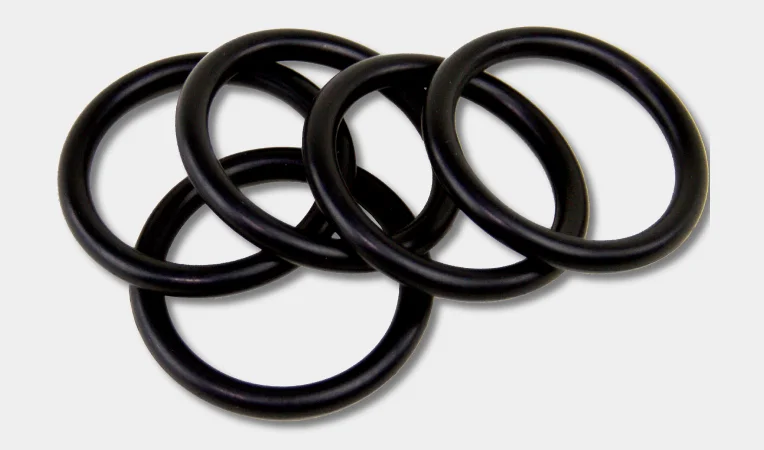
EPDM O-Rings
EPDM O-rings are rubber sealing components that sit between mating surfaces to stop fluid or gas leakage in automotive, industrial, and outdoor systems. The guide covers the key properties, common applications, and selection criteria for EPDM O-rings, from coolant system sealing to food-processing applications in the USA.
Rubber Xpert Inc. helps buyers who need material specifications, custom sizing, and dependable bulk fulfillment for any sealing requirement.
Buy EPDM O-Rings in Bulk from a Trusted Manufacturer
& Supplier, Rubber Xpert Inc.
Rubber Xpert Inc. is a manufacturer and supplier worth considering. We produce EPDM O-rings in a wide range of sizes and custom specifications, serving industries (automotive, industrial machinery, and outdoor equipment).
Our focus is on consistent material quality, tight dimensional tolerances, and reliable fulfillment, so you get the right rubber O-ring for your application, every time.
Silicone O-Rings
Flexible seals rated -60°C to 230°C for food-grade and medical use.
RING
01
Neoprene O-Rings
Ozone and weather-resistant seals for refrigeration and outdoor environments.
RING
02
Fluorosilicone O-Rings
Fuel- and solvent-resistant seals that combine silicone flexibility in wide temperature ranges.
RING
03
FKM O-Rings
Superior chemical- and heat-resistant seals that perform reliably in temps up to 200°C.
RING
04
HNBR O-Rings
Oil-, H2S-, and high-load-resistant seals engineered for dynamic sealing systems.
RING
05
Buna (NBR) O-Rings
Industry-standard petroleum-resistant seals for hydraulic and pneumatic systems.
RING
06
Polyurethane O-Rings
High-abrasion, extrusion-resistant dynamic seals performing reliably up to 80°C.
RING
07
Santoprene O-Rings
Thermoplastic rubber seals offering rubber-like flexibility with full plastic recyclability.
RING
08
Butyl Rubber O-Rings
Low-permeability, gas-retention seals built for airtight critical applications.
RING
09
Natural Rubber O-Rings
High-elasticity, high-tensile seals suited for low-pressure non-oil environments.
RING
10
AEM O-Rings
Hot-oil and transmission-fluid-resistant seals engineered for underhood automotive demands.
RING
11
Why Buy EPDM O-Rings from Rubber Xpert Inc.?
The reasons to buy EPDM O-rings from Rubber Xpert Inc. are listed below.
- Custom Manufacturing Capabilities: Produces EPDM O-rings to customer-defined geometries, durometer ratings, and cross-sectional dimensions.
- EPDM Compound Selection: Buyers choose from multiple EPDM formulations, including peroxide-cured, sulfur-cured, and FDA-compliant grades.
- Dimensional Accuracy: Each O-ring is manufactured to tight tolerances, ensuring consistent ID, OD, and cross-section across every production batch.
- In-Process Quality Control: Parts undergo durometer testing, visual inspection, and dimensional verification at each stage of the production cycle.
- Bulk Production Capacity: Fulfills high-volume OEM orders without compromising lead times or material consistency.
- Specification-to-Delivery Support: Engineers assist buyers from initial material selection through prototype validation and final production release.
- Certifiable Material Traceability: Each batch ships with full material documentation, compound data sheets, and, upon request, compliance certifications.
What Are EPDM O-Rings?
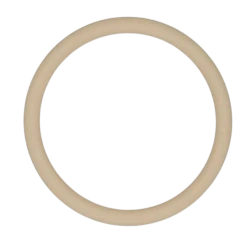
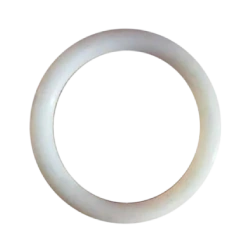
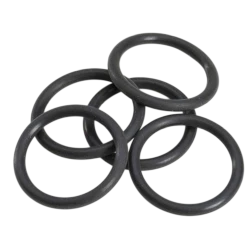
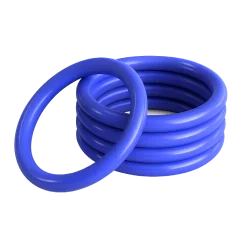
Ethylene Propylene Diene Monomer (EPDM) O-rings are circular elastomeric seals with a round cross-section that sit within a machined groove and form a pressure-tight seal when compressed between mating surfaces, with the deformation closing off any gap through which fluid or gas would otherwise pass. EPDM offers strong resistance to weathering, ozone, steam, and water-based fluids over a wide temperature range, but it is incompatible with petroleum-based oils, fuels, and hydrocarbon solvents.
What Materials and EPDM Compounds Are Used to
Manufacture EPDM O-Rings?
Warning: Undefined array key "rubber_product_material_main_desc" in /home/u221192900/domains/rubberxperts.com/public_html/wp-content/themes/rubberexperts/templates/sub-product-details-template-new.php on line 374
EPDM O-rings use ethylene propylene diene monomer as the base elastomer, vulcanized through sulfur-curing for general-purpose applications or peroxide-curing for improved compression set resistance and higher temperature stability. Food-grade compounds meet FDA 21 CFR and NSF 61 certifications for potable water and food-processing contact, while medical-grade formulations meet stricter purity requirements for pharmaceutical and healthcare use.
Carbon black-filled grades offer improved tensile strength for dynamic sealing, and EPDM-polypropylene blends provide a thermoplastic elastomer option with processability.
EPDM O-Rings Material Comparison Table
The EPDM O-Rings material comparison is shown in the table below.
| Compound Type | Temperature Range | Flexibility | Chemical Resistance | Regulatory Suitability | Typical Applications | Key Limitations |
|---|---|---|---|---|---|---|
| General-Purpose (Sulfur-Cured) EPDM | -40°C to 120°C | High | Water, steam, mild acids, alkalis | None specific | Plumbing, HVAC, irrigation systems | Poor compression set resistance at elevated temps |
| Peroxide-Cured EPDM | -50°C to 150°C | Moderate-High | Steam, ozone, ketones, dilute acids | None specific | Industrial sealing, automotive coolant systems | Higher material cost than sulfur-cured grades |
| Food-Grade EPDM | -40°C to 120°C | High | Water, steam, mild cleaning agents | FDA 21 CFR, NSF 61 | Food processing, potable water systems | Limited resistance to concentrated chemicals |
| Medical-Grade EPDM | -40°C to 130°C | High | Aqueous solutions, steam sterilization | USP Class VI, ISO 10993 | Pharmaceutical equipment, medical devices | Strict processing and documentation requirements |
| Carbon Black-Filled EPDM | -40°C to 140°C | Moderate | Ozone, UV, weathering, steam | None specific | Dynamic sealing, outdoor industrial equipment | Reduced elongation compared to unfilled grades |
| EPDM-Polypropylene Blend (TPE) | -30°C to 120°C | High | Water, mild chemicals | Varies by formulation | Automotive weatherstripping, low-pressure seals | Not suitable for high-pressure dynamic applications |
How to Choose the Right EPDM O-Ring for Your Needs?
Selecting the right EPDM O-ring requires evaluating several application-specific factors before finalizing a specification. The selection criteria are outlined below.
- Size and Cross-Section: Match the inner diameter, outer diameter, and cross-section to the groove dimensions exactly, as incorrect sizing can cause leaks or premature seal failure.
- Hardness (Durometer): Select a Shore A durometer between 40 and 80 depending on sealing pressure, with softer grades for low-pressure static seals.
- Temperature Range: Confirm the compound's rated temperature range covers both the minimum and maximum operating temperatures.
- Operating Pressure: Evaluate system pressure against the O-ring's extrusion resistance, and consider back-up rings for applications exceeding 1,500 PSI in dynamic sealing configurations.
- Media Compatibility: Verify EPDM compatibility with all fluids, chemicals, and gases in the system, as exposure to petroleum oils, fuels, or hydrocarbon solvents degrades EPDM.
- Compression Set Resistance: Choose peroxide-cured EPDM for applications requiring long-term sealing under sustained compression, as sulfur-cured grades exhibit higher compression.
- Regulatory Requirements: Specify FDA 21 CFR, NSF 61, USP Class VI, or ISO 10993-compliant compounds when the application involves food contact, potable water, or medical and pharmaceutical equipment.
- Operating Environment: EPDM O-rings seal pumps, valves, and fluid handling equipment exposed to steam, water, and EPDM performs well in outdoor, UV-exposed, and ozone-rich environments, making it suitable for weathersealing, roofing, and exterior industrial equipment.
Where Are EPDM O-Rings Commonly Used?
EPDM O-rings are used in industries where moisture, weathering, and chemical resistance are critical sealing requirements.
Automotive
EPDM O-rings seal coolant systems, radiator hoses, and brake fluid circuits where heat and water resistance are critical, making them a choice for sealing components in the automotive industry in passenger and commercial vehicles.
Electronics
EPDM O-rings protect enclosures, connectors, and cable glands from moisture ingress, with their ozone resistance and dimensional stability meeting electronics industry requirements.
Industrial Machinery
Mild chemicals, delivering dependable performance in industrial and machinery environments under sustained pressure.
Food & Beverage Processing
FDA 21 CFR and NSF 61-compliant EPDM O-rings seal processing lines and sanitary fittings, meeting the hygiene and regulatory demands of food processing facilities using steam and CIP cleaning systems.
Medical & Healthcare Equipment
USP Class VI and ISO 10993-compliant EPDM O-rings seal sterilization equipment and fluid delivery systems, satisfying the biocompatibility requirements of medical industry applications.
HVAC & Refrigeration
EPDM O-rings seal refrigerant lines and air handling units against ozone and temperature cycling, making them a preferred choice for HVAC industry installations in industrial buildings.
Marine & Outdoor Environments
EPDM O-rings withstand prolonged UV, saltwater, and ozone exposure in marine hardware and outdoor enclosures, supporting military industry and marine-grade sealing in harsh environmental conditions.

Frequently Asked Questions About EPDM O-rings
The most common questions about EPDM O-rings are answered below.
EPDM O-rings are made of ethylene propylene diene monomer, a synthetic elastomer vulcanized through sulfur or peroxide curing. Key characteristics include strong resistance to ozone, UV, steam, and water-based fluids, with compression set recovery across a wide service temperature range.
EPDM O-rings operate between -50°C and 150°C, with peroxide-cured compounds extending performance up to 175°C in dry heat conditions. Sulfur-cured general-purpose grades are rated to 120°C and must not exceed that under sustained exposure.
EPDM O-rings handle UV, ozone, and outdoor weathering well due to their saturated polymer backbone, which resists ozone attack and UV degradation without surface cracking. This makes EPDM one of the most weather-resistant elastomers for long-term outdoor sealing.
EPDM O-rings are compatible with water, steam, ethylene glycol coolants, mild acids, alkalis, ketones, and polar solvents (acetone and MEK). They perform with phosphate ester hydraulic fluids and dilute cleaning agents used in Clean-in-Place (CIP) systems.
EPDM O-rings should not be used with petroleum-based oils, mineral oils, gasoline, diesel, hydrocarbon solvents, or aromatic and aliphatic fuels, as they cause swelling and compound degradation. Nonpolar solvents and halogenated hydrocarbons (chlorinated solvents) are incompatible with EPDM.
EPDM O-rings are primarily used in automotive coolant systems, HVAC equipment, food processing lines, potable water infrastructure, and medical sterilization equipment. The regulatory-compliant formulations support general-purpose and specialty sealing requirements.
Yes, food-grade and drinking-water-certified EPDM O-rings are available in formulations that comply with FDA 21 CFR 177.2600 and NSF/ANSI 61 for potable water systems. The compounds are formulated to minimize extractables for food processing, beverage handling, and municipal water distribution applications.
Need Custom O-Rings for Your Application?
Tell us your size, material, quantity or application requirements and our team will provide a competitive quote.
Materials
Manufacturing
& Fast Response
You can upload it with your enquiry.