
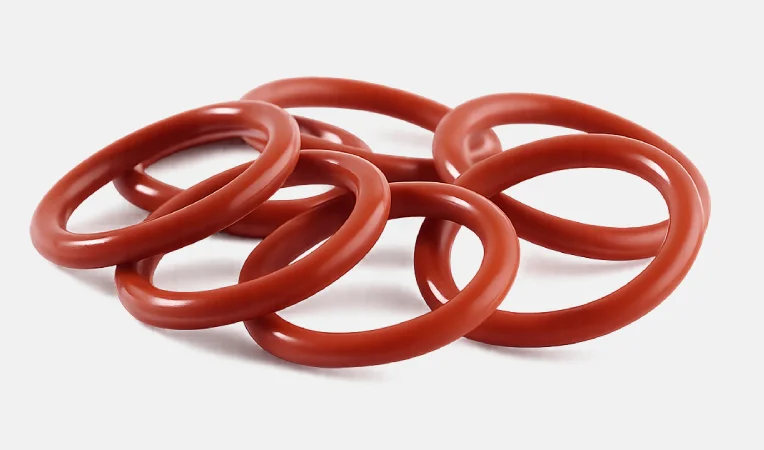
HNBR O-Rings
The Hydrogenated Nitrile Butadiene Rubber (HNBR) O-rings are flexible sealing components to prevent leakage between mating surfaces in high-heat, and oil-exposed systems. HNBR resist heat, ozone, and abrasion better than standard nitrile, built from hydrogenated nitrile o rings compounds, making them a choice for automotive, hydraulic, and oil and gas equipment.
Rubber Xpert Inc. is the trusted USA supplier and manufacturer for bulk and custom HNBR O-rings, with accuracy, multi-point quality control, and technical support from spec to delivery. Our team match the right HNBR grade to your application, if you need a standard size or a custom compound built for your exact operating conditions.
Buy HNBR O-Rings in Bulk from a Trusted Manufacturer
& Supplier, Rubber Xpert Inc.
Rubber Xpert Inc. manufactures and supplies HNBR O-rings in bulk for consistent dimensional accuracy and dependable performance in demanding industrial conditions.
We support OEM and high-volume industrial orders with the same quality control from prototype to full production, from standard AS568 sizes to custom cross-sections, backed by our full range of rubber O-ring solutions.
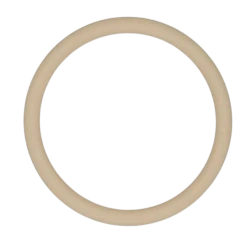
Silicone O-Rings
High-temperature flexible sealing offering a broad thermal range with strong resistance to UV, ozone, and weathering.
RING
01
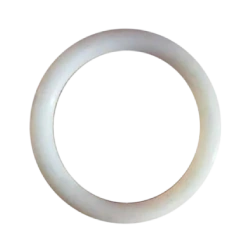
EPDM O-Rings
Weather-resistant synthetic rubber sealing built for water, steam, and outdoor exposure in a wide temperature range.
RING
02
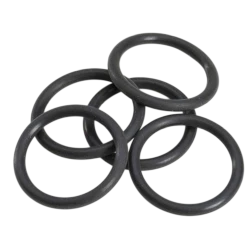
Neoprene O-Rings
Durable chloroprene rubber sealing valued for its balance of weather resistance, flexibility, and moderate chemical resistance.
RING
03
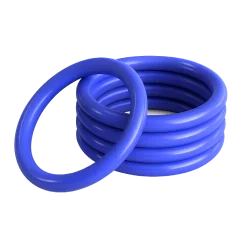
FKM O-Rings
Premium fluorocarbon sealing engineered for high-temperature stability and superior resistance to fuels, oils, and chemicals.
RING
04
HNBR O-Rings
Upgraded nitrile for high-load, oil-rich environments where standard NBR fails under heat and wear.
RING
05
Buna (NBR) O-Rings
Cost-effective nitrile rubber sealing known for reliable performance in oil, fuel, and hydraulic environments.
RING
06
Polyurethane O-Rings
High-abrasion sealing rubber ideal for dynamic, high-wear environments.
RING
07
Santoprene O-Rings
Weatherproof thermoplastic sealing for outdoor and consumer-grade systems.
RING
08
Butyl Rubber O-Rings
Dense synthetic rubber built for near-zero gas permeability.
RING
09
Natural Rubber O-Rings
The original O-ring material, valued for rebound and elongation.
RING
10
AEM O-Rings
Engine-bay elastomer built to resist the heat and oil at once.
RING
11
Why Buy HNBR O-Rings from Rubber Xpert Inc.?
The reasons to buy HNBR O-rings from Rubber Xpert Inc. are listed below.
- Custom Compound Formulation: HNBR is molded to the exact hydrogenation degree and cure system a project requires.
- ACN Content Matching: ACN levels are selected from low (17-22%) for cold flexibility to high (40-50%) for oil and sour-gas resistance.
- Dimensional Accuracy: Parts are molded to AS568 and custom cross-section tolerances for drop-in fit.
- Multi-Point Quality Control: Durometer, tensile, and compression-set testing catch compound deviations before shipment.
- Bulk Production Capability: Tooling scales from prototype runs to high-volume orders without sacrificing consistency.
- Color-Coded Identification: Green HNBR is supplied for automotive A/C systems and black HNBR for oil and gas, preventing compound mix-ups.
- Technical Support: One contact guides the order from specification through final delivery.
What Are HNBR O-Rings?
HNBR (Hydrogenated Nitrile Butadiene Rubber) O-rings are circular elastomeric seals made by hydrogenating standard NBR, which improves heat, ozone, and abrasion resistance. The round cross-section compresses inside a machined groove, deforming to fill the gap and block fluid or gas from passing through.
HNBR retains strong resistance to mineral oils, fuels, and hydraulic fluids in roughly -40°C to 150°C, with higher tensile strength and abrasion resistance than standard nitrile, but it costs more and resists chlorinated hydrocarbons, ketones, and strong acids poorly.
What Materials and HNBR Compounds Are Used to
Manufacture HNBR O-Rings?
Warning: Undefined array key "rubber_product_material_main_desc" in /home/u221192900/domains/rubberxperts.com/public_html/wp-content/themes/rubberexperts/templates/sub-product-details-template-new.php on line 374
HNBR is the base elastomer, produced by hydrogenating NBR to varying degrees, with ACN content and cure system defining each compound’s performance grade. General-purpose sealing uses medium-ACN (34-40%), peroxide-cured HNBR, while high-temperature and oilfield service call for high-ACN (40-50%) grades built for sour-gas and hot-oil exposure.
Food-grade HNBR compounds meet FDA or NSF standards for potable water and food contact, but medical-grade formulations remain uncommon since silicone and FKM dominate that space.
HNBR O-Rings Material Comparison Table
The HNBR O-Rings material comparison is shown in the table below.
| HNBR Material / Compound | Temperature | Flexibility | Chemical Resistance | Regulatory Suitability | Typical Applications | Key Limitations |
|---|---|---|---|---|---|---|
| Low-ACN HNBR | -40°C to 150°C | Excellent | Good oil & fuel resistance | Industrial | Cold-climate hydraulics, automotive | Lower oil resistance than high-ACN grades |
| Medium-ACN HNBR | -40°C to 150°C | Good | Excellent oils, fuels & hydraulic fluids | Industrial, FDA grades available | General industrial, hydraulic, automotive | Not resistant to ketones or strong acids |
| High-ACN HNBR | -35°C to 150°C | Moderate | Superior oil & sour gas resistance | Industrial | Oil & gas, engine seals | Reduced low-temperature flexibility |
| Peroxide-Cured HNBR | Up to 150°C | Good | Excellent heat & ozone resistance | FDA grades available | High-temperature industrial sealing | Higher cost |
| Sulfur-Cured HNBR | Up to 125–140°C | Good | Good oil resistance | Industrial | Dynamic seals | Lower heat resistance |
| Food-Grade HNBR | -40°C to 150°C | Good | Resistant to approved food media | FDA / NSF | Food & beverage equipment | Limited to certified compounds |
| Custom HNBR Compound | Formulation dependent | Varies | Application-specific | Available on request | OEM & specialised equipment | Longer lead time |
How to Choose the Right HNBR O-Ring for Your Needs?
Choosing the HNBR O-ring starts with evaluating your application's operating conditions and sealing requirements. The key selection factors are outlined below.
- Size and Cross-Section: Choose an O-ring that matches the groove dimensions and AS568 or custom sizing specifications. Proper sizing ensures adequate compression and leak-free sealing.
- Hardness (Durometer): Select a durometer based on operating pressure and extrusion resistance. Softer grades improve sealing, while harder grades perform better under higher loads.
- Operating Temperature: Match the compound to the application's continuous and peak temperatures. Standard HNBR typically operates between -40°C and 150°C, depending on the formulation.
- Pressure Requirements: Match the HNBR compound to the system pressure and install backup rings where needed to prevent extrusion. Evaluate static and dynamic pressure conditions before selecting the seal.
- Media Compatibility: Ensure the compound is compatible with the oils, fuels, or hydraulic fluids in the system. HNBR is not suitable for ketones, chlorinated hydrocarbons, or strong acids.
- Compression Set Resistance: Choose compounds with low compression set for long-term sealing performance. Peroxide-cured HNBR generally provides better retention of sealing force.
- Regulatory Requirements: Verify whether FDA, NSF, or other certifications are required for your application. Only approved HNBR formulations meet these regulatory standards.
- Operating Environment: Consider exposure to ozone, abrasion, weathering, and mechanical stress. HNBR performs well in demanding industrial and automotive environments.
Where Are HNBR O-Rings Commonly Used?
HNBR O-rings are used in industries requiring durable seals against heat, oils, pressure, and abrasion. Common applications include the following industries.
Automotive
Engine, fuel, transmission, and air conditioning systems rely on HNBR seals for reliable performance. These demanding applications make it a common choice in the automotive industry.
Oil & Gas Equipment
Pumps, valves, and drilling equipment use HNBR to withstand oils, fuels, and harsh operating conditions. The durability makes it suitable for the oil and gas industry.
Hydraulic & Pneumatic Systems
Hydraulic cylinders, pumps, and pneumatic valves use HNBR to prevent fluid and air leakage. The material performs well under pressure and repeated motion.
Industrial Machinery
Production equipment and rotating machinery depend on HNBR for long-lasting sealing. Its wear resistance supports industrial and machinery applications.
Mining & Heavy Equipment
Hydraulic systems in mining and construction equipment benefit from HNBR's abrasion and impact resistance. It helps maintain sealing performance in harsh environments.
Agricultural Equipment
Tractors, harvesters, and hydraulic equipment use HNBR for reliable sealing in outdoor conditions. The material resists oils, fuels, and weather exposure.
HVAC & Refrigeration
Compressors and refrigeration systems use HNBR to seal lubricated components. Its heat and ozone resistance make it suitable for the HVAC industry.


Frequently Asked Questions About
HNBR O-rings
Find answers to the questions about HNBR O-rings, including their performance and material selection.
The main advantages of HNBR O-rings compared to standard NBR are higher heat resistance, better ozone resistance, greater abrasion resistance, and improved mechanical strength. The properties allow HNBR to perform in more demanding operating environments.
The operating temperature range for HNBR O-rings is -40°C to 150°C, depending on the compound formulation and application. Some specialised grades can tolerate higher short-term temperatures.
The fluids, oils, and chemicals compatible with HNBR O-rings include mineral oils, petroleum-based fuels, hydraulic fluids, lubricating oils, water, and dilute chemicals.
HNBR is not recommended for ketones, chlorinated hydrocarbons, or strong acids.
The industries and applications that most commonly use HNBR O-rings include automotive, oil and gas, hydraulic systems, industrial machinery, mining, agriculture, and HVAC equipment. HNBR O-rings are selected where heat, oil resistance, and mechanical durability are required.
HNBR O-rings cost less while providing excellent resistance to heat, abrasion, and petroleum-based fluids. Consider FKM O-rings for applications requiring broader chemical compatibility and higher operating temperatures.
Need Custom O-Rings for Your Application?
Tell us your size, material, quantity or application requirements and our team will provide a competitive quote.
Materials
Manufacturing
& Fast Response
You can upload it with your enquiry.