
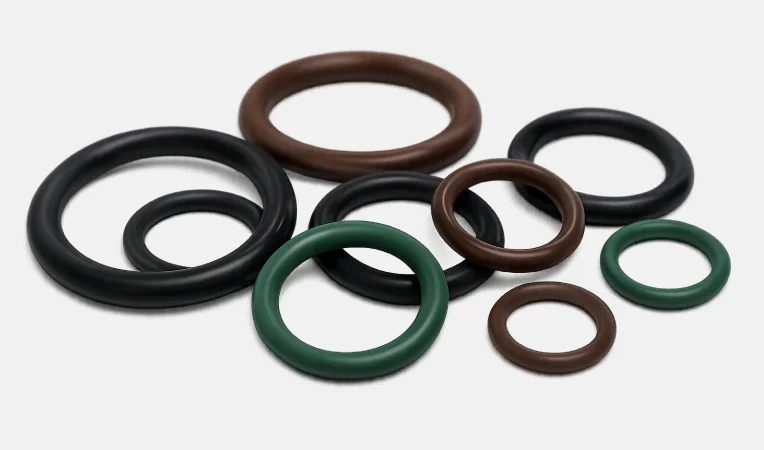
FKM O-Rings
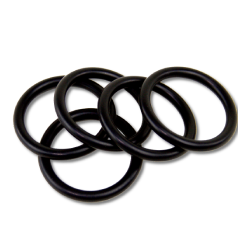
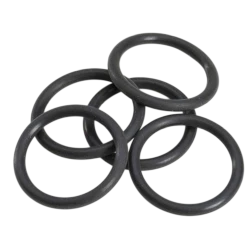
FKM O-Rings are flexible sealing components to prevent leakage between mating surfaces under demanding operating conditions. The seals resist high heat, aggressive chemicals, and petroleum-based fluids, making them a trusted choice in automotive, aerospace, oil and gas, and industrial applications.
Rubber Xpert Inc. produces FKM O-Rings to specifications and guides you through compound selection, sizing, and durometer choice, ensuring the right seal reaches the right application every time.
Buy FKM O-Rings in Bulk from a Trusted Manufacturer
& Supplier, Rubber Xpert Inc.
Rubber Xpert Inc. manufactures and supplies FKM O-Rings in bulk, with consistent material quality and dimensional control. Our capabilities support custom sizes, cross-sections, and compound formulations custom to OEM and industrial requirements.
Explore our full range of rubber O-ring options and partner with a manufacturer built to support your bulk purchasing needs.
Silicone O-Rings
High-purity inert sealing for extreme thermal cycles in food, medical, and industrial environments.
RING
01
EPDM O-Rings
Weatherproof seal built for steam, ozone, and UV exposure in outdoor and water-based systems.
RING
02
Neoprene O-Rings
Flame-resistant general-purpose seal with strong resistance to refrigerants and outdoor weathering.
RING
03
Fluorosilicone O-Rings
Silicone-FKM hybrid for fuel and oil resistance with extreme low-temp flexibility in aerospace static seals.
RING
04
HNBR O-Rings
Upgraded nitrile for high-load, oil-rich environments where standard NBR fails under heat and wear.
RING
05
Buna (NBR) O-Rings
Oil and fuel-resistant elastomer seals that resist swelling and degradation when exposed to petroleum-based fluids and hydraulic systems.
RING
06
Polyurethane O-Rings
High-abrasion, high-load elastomer seals that hold up under repeated mechanical stress in dynamic sealing applications.
RING
07
Santoprene O-Rings
Chemically resistant thermoplastic elastomer seals engineered for consistent performance across repeated flex cycles.
RING
08
Butyl Rubber O-Rings
Low-permeability elastomer seals that maintain vacuum and gas-tight integrity in low-moisture, low-permeation environments.
RING
09
Natural Rubber O-Rings
High-resilience elastomer seals that deliver superior elasticity and tear strength in general-purpose sealing applications.
RING
10
AEM O-Rings
Heat and oil-resistant elastomer seals that withstand prolonged exposure to hot oils and engine-grade lubricants.
RING
11
Why Buy FKM O-Rings from Rubber Xpert Inc.?
Reasons to buy FKM O-Rings from Rubber Xpert Inc. are listed below.
- Custom Manufacturing: FKM O-Rings are produced in custom dimensions, cross-sections, and compounds for exact application fit.
- Material Selection Expertise: Engineers recommend the correct FKM grade based on chemical exposure and temperature demands.
- Dimensional Accuracy: Precision tooling delivers consistent sizing for sealing performance.
- Meticulous Quality Control: Every batch undergoes testing to confirm material integrity and dimensional consistency.
- Scalable Bulk Production: High-volume capacity supports large orders without sacrificing lead time.
- End-to-End Support: A technical team assists buyers from specification through delivery.
What Are FKM O-Rings?
FKM O-Rings are circular, ring-shaped seals made from fluoroelastomer (FKM/Viton) compound to prevent fluid or gas leakage between mated surfaces. The FKM compresses when installed inside a sized groove, creating contact pressure against mating surfaces that blocks the escape path for the sealed medium.
The design withstands high temperatures, resists aggressive chemicals, fuels, and oils, and maintains sealing integrity under pressure. FKM O-Rings show limited flexibility in extreme cold and cost more than elastomers like NBR or natural rubber, making material selection important for applications outside their optimal temperature range.
What Materials and FKM (Fluorocarbon) Compounds Are Used to
Manufacture FKM O-Rings?
Warning: Undefined array key "rubber_product_material_main_desc" in /home/u221192900/domains/rubberxperts.com/public_html/wp-content/themes/rubberexperts/templates/sub-product-details-template-new.php on line 374
FKM O-Rings are built on fluoroelastomer as the base elastomer, with distinct compound grades formulated for different needs. Type 1 copolymers suit general-purpose oil and fuel applications, while Type 2 terpolymers offer stronger heat and chemical resistance.
Type 3 and GLT/GFLT grades extend low-temperature flexibility down to -40°C, and food-grade and medical-grade FKM compounds meet FDA compliance and biocompatibility standards for consumable and medical applications.
FKM O-Rings Material Comparison Table
FKM O-rings material comparison table is shown below.
| Compound Type | Temperature Range | Flexibility | Chemical Resistance | Regulatory Suitability | Typical Applications | Key Limitations |
|---|---|---|---|---|---|---|
| Type 1 (General-Purpose) | -20°C to 200°C | Moderate. Stiffens near lower limit | Good resistance to oils, fuels, and mineral acids | General industrial use | Automotive seals, hydraulic systems, general fluid handling | Poor low-temperature flexibility. Limited resistance to ketones and amines |
| Type 2 (High-Temperature/Chemical-Resistant) | -20°C to 230°C | Lower flexibility at cold temperatures | Improved resistance to acids and aggressive chemicals | Industrial and aerospace use | Aerospace fuel systems, chemical processing, harsh industrial environments | Reduced compression set performance at temperature extremes. Costlier than Type 1 |
| Type 3 / GLT & GFLT (Low-Temperature) | -40°C to 200°C | High flexibility retained at low temperatures | Moderate. Reduced versus Type 2 | Industrial use requiring cold performance | Outdoor installations, cold-room processing, cryogenic transfer lines | Trades some chemical resistance for low-temperature gains |
| Food-Grade FKM (FDA-Compliant) | -20°C to 200°C | Moderate | Resistant to cleaning agents, steam, and process fluids | FDA-compliant for food and beverage contact | Food processing equipment, beverage dispensing, sanitary piping | Grade-specific compliance. Not automatically medical-grade |
| Medical-Grade FKM | -20°C to 200°C | Moderate | Resistant to sterilization agents and bodily fluids | Biocompatibility-validated for medical use | Medical devices, pharmaceutical processing equipment | Requires validated sourcing. Not interchangeable with standard FKM grades |
How to Choose the Right FKM O-Ring for Your Needs?
Selecting the right FKM O-Ring depends on matching application variables to the correct size, compound, and hardness. The key factors to evaluate are outlined below.
- Size and Cross-Section: Confirm inner diameter, cross-section thickness, and groove dimensions against AS568 standards or your custom specification to ensure proper compression and fit.
- Hardness (Durometer): Select a durometer between 70-90 Shore A based on pressure load and groove design. A higher durometer resists extrusion under high pressure, while a lower durometer improves sealing at low closure force.
- Temperature Range: Match the compound grade to your operating temperature: standard Type A grades handle -20°C to 200°C, while GLT/GFLT grades extend low-temperature flexibility to -40°C.
- Pressure Conditions: Higher system pressures require higher durometer and tighter groove tolerances to prevent extrusion and seal blowout under dynamic or static loads.
- Media Compatibility: Verify chemical exposure against the compound type. Type 2 terpolymers resist aggressive acids and chemicals, while Type 1 suits standard oils and fuels.
- Compression Set Requirements: Applications requiring long-term sealing under sustained load need compounds with low compression set to maintain seal force over repeated thermal cycles.
- Regulatory Requirements: Food, beverage, and medical applications require FDA-compliant or biocompatibility-validated grades rather than standard industrial compounds.
- Operating Environment: Account for UV exposure, ozone, humidity, and installation space constraints, since the conditions affect compound longevity beyond core temperature and chemical resistance.
Where Are FKM O-Rings Commonly Used?
FKM O-Rings serve industries where high heat, aggressive chemicals, or fuel exposure would degrade standard elastomers. The broad range spans the sectors outlined below.
Automotive
Engine seals, fuel injection systems, and transmission components rely on FKM's resistance to hot oils and fuel degradation, making it standard in the automotive industry.
Aerospace
Fuel systems, hydraulic lines, and engine seals demand materials that withstand extreme temperature swings, driving adoption in the aerospace industry for flight-critical applications.
Oil & Gas
Downhole tools, valves, and drilling equipment expose seals to crude oil and high-pressure environments, supporting demanding needs throughout the oil & gas industry.
Chemical Processing
Pumps, valves, and reactor seals encounter aggressive acids and solvents that degrade general-purpose rubber, making FKM preferred in chemical processing equipment.
Industrial Machinery
Rotating equipment and gearboxes require seals that endure sustained thermal cycling and lubricant exposure, supporting sealing in industrial and machinery applications.
Hydraulic & Pneumatic Systems
High-pressure cylinders and pneumatic actuators need seals resistant to extrusion under repeated cycling, and FKM's low compression set maintains sealing force in extended lifespans.
Semiconductor & Electronics Manufacturing
Wafer processing and cleanroom equipment require seals that resist aggressive cleaning chemicals, and FKM's inertness supports contamination-sensitive processes throughout the electronics industry.

Frequently Asked Questions About
FKM O-rings
Common questions about FKM O-Ring performance, compatibility, and application limits are answered below.
The main performance advantages of FKM O-rings are high-temperature stability up to 230°C, strong resistance to oils and fuels, and low compression set under sustained load.
The operating temperature range for FKM O-rings spans -20°C to 230°C for standard grades. Specialized GLT and GFLT compounds extend low-temperature flexibility down to -40°C for cold-environment applications.
The chemicals, fuels, and fluids compatible with FKM O-rings include petroleum-based oils, hydraulic fluids, automotive fuels, and many mineral acids.
Compatibility varies by compound type, so fluid exposure must be verified against the specific FKM grade selected.
The key differences between FKM and NBR O-rings are temperature range and cost, with FKM withstanding higher heat while NBR offers a more budget-friendly option for standard oil and fuel exposure. An NBR O-ring delivers performance at a lower price point.
FKM O-rings should not be used in applications involving ketones, esters, amines, or glycol-based brake fluids, since the media cause swelling and degradation.
They perform poorly in extreme cold below their rated low-temperature threshold without a specialized GLT or GFLT grade.
Need Custom O-Rings for Your Application?
Tell us your size, material, quantity or application requirements and our team will provide a competitive quote.
Materials
Manufacturing
& Fast Response
You can upload it with your enquiry.