
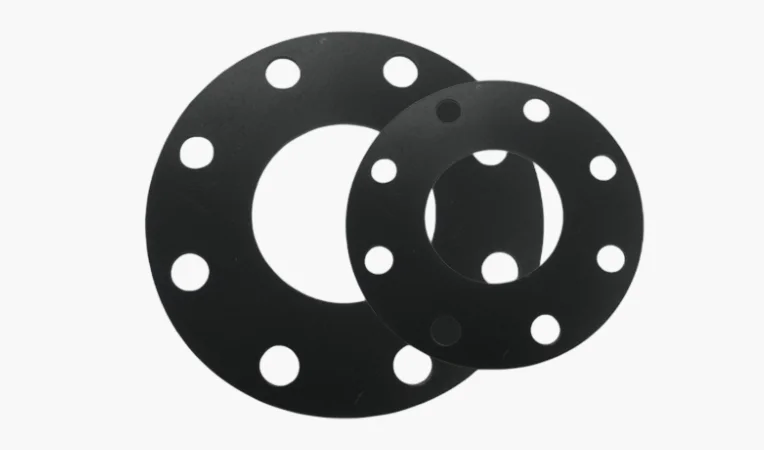
Silicone Gasket
RubberXperts manufactures silicone gaskets for automotive, electronics, food processing, medical, and HVAC applications where a seal has to hold up under heat, chemical exposure, or strict cleanliness standards that general-purpose rubber can’t meet. Every gasket ships in standard durometers and cross-sections or is built to a custom print, with material grade matched to the application’s temperature range and compliance requirements. Browse the full rubber gaskets line for related seal materials.
A silicone gasket is a sealing component molded or die-cut from silicone elastomer that fills the gap between two mating surfaces to block the passage of liquids, gases, and airborne particles. A silicone gasket holds its seal across a wider temperature range than most rubber compounds, resisting heat, UV exposure, and ozone without hardening or cracking. A custom silicone gasket is manufactured to a specific shape, thickness, and durometer for a single application, cut or molded to match an exact bolt pattern, housing profile, or enclosure design.
10% discount for bulk orders over $1,000
Types of Silicone Gasket Rubber Xperts Provide
RubberXperts manufactures seven silicone gasket types, each built for a specific density, temperature range, and compliance profile.
Solid Silicone Gaskets
Solid silicone gaskets are molded or die-cut from a fully dense silicone rubber sheet with no cellular structure, giving them consistent compression and a firm, uniform seal under bolted load. Solid construction holds tighter dimensional tolerances than sponge or foam silicone, making it the standard choice where the gasket needs to resist tearing and hold a fixed profile under sustained pressure.
- Applications: Flange sealing, enclosure gaskets, gasketed access panels, general industrial sealing
- Materials: Solid silicone rubber (VMQ)
- Temperature Resistance: -60°C to 200°C (short-term up to 230°C)
- Hardness (Durometer): 30–80 Shore A (most commonly 40–60)
- Sizing: Standard sheet stock and custom die-cut profiles available
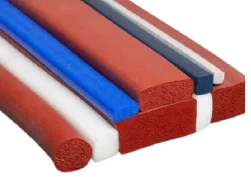
Silicone Sponge Gaskets
Silicone sponge gaskets use an open-cell silicone structure that compresses easily under light bolt load, making them a fit for gaps that vary slightly from panel to panel. The open-cell structure absorbs surface irregularities that a solid gasket would bridge over, so silicone sponge seals uneven mating surfaces without needing the high clamping force a solid gasket requires.
- Applications: Electronics enclosures, HVAC access doors, weatherstripping, low-pressure sealing
- Materials: Silicone sponge rubber (open-cell)
- Temperature Resistance: -60°C to 180°C
- Hardness (Durometer): 5–25 Shore 00 (compression-based, not Shore A)
- Sizing: Standard sheet stock and custom die-cut profiles available
Silicone Foam Gaskets
Silicone foam gaskets use a closed-cell silicone structure that resists water and air infiltration better than an open-cell sponge while still compressing under light clamping pressure. The closed-cell structure keeps moisture from wicking through the gasket itself, so silicone foam holds a weatherproof seal in outdoor and washdown enclosures where sponge silicone would absorb water.
- Applications: Outdoor electrical enclosures, weatherproof housings, HVAC ductwork, EMI shielding backing
- Materials: Silicone foam rubber (closed-cell)
- Temperature Resistance: -60°C to 180°C
- Hardness (Durometer): 8–35 Shore 00 (compression-based, not Shore A)
- Sizing: Standard sheet stock and custom die-cut profiles available
Fluorosilicone Gaskets
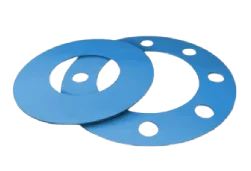
Fluorosilicone gaskets combine silicone's wide temperature range with fuel and oil resistance that standard silicone doesn't offer, filling the gap between general-purpose silicone and full fluorocarbon compounds. Where a standard silicone gasket would swell on contact with fuel or hydraulic oil, fluorosilicone holds its seal, making it a fit for aerospace and military hardware exposed to both temperature extremes and fuel contact.
- Applications: Aerospace fuel systems, military hardware, low-temperature fuel-exposed seals
- Materials: Fluorosilicone (FVMQ)
- Temperature Resistance: -70°C to 175°C (short-term up to 200°C)
- Hardness (Durometer): 40–80 Shore A
- Sizing: Standard sheet stock and custom die-cut profiles available

FDA-Grade Silicone Gaskets
FDA-grade silicone gaskets are molded from silicone compounds certified for direct food and beverage contact under FDA 21 CFR 177.2600, with no additives that leach into product during processing. Food and beverage equipment, dairy processing lines, and pharmaceutical packaging equipment all specify FDA-grade silicone because the compliance certification travels with the material, not just the finished part.
- Applications: Food and beverage processing, dairy equipment, pharmaceutical packaging, potable water systems
- Materials: FDA-compliant silicone rubber (VMQ)
- Temperature Resistance: -60°C to 200°C
- Hardness: 30–70 Shore A
- Sizing: Standard sheet stock and custom die-cut profiles available

Platinum-cured Silicone Gaskets
Platinum-cured silicone gaskets use a platinum catalyst instead of a peroxide catalyst during molding, which eliminates the byproduct residue that peroxide-cured silicone leaves behind. That residue-free cure is what qualifies platinum-cured silicone for medical implants, cleanroom equipment, and infant-care products, since the material meets biocompatibility standards that peroxide-cured silicone can't reach without a secondary post-cure bake.
- Applications: Medical devices, implantable components, cleanroom equipment, infant-care products
- Materials: Platinum-cured silicone rubber (VMQ)
- Temperature Resistance: -60°C to 200°C
- Hardness: 20–70 Shore A
- Sizing: Standard sheet stock and custom die-cut profiles available
Custom Die-Cut Silicone Gaskets
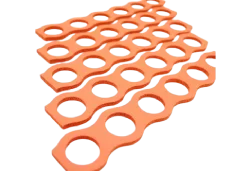
Custom die-cut silicone gaskets are cut to an exact 2D profile from solid, sponge, or foam silicone sheet stock, matched to a specific bolt pattern, housing cutout, or enclosure seam. Die cutting holds tight profile tolerances at a lower tooling cost than compression molding, which makes it the standard production method for flat gaskets and silicone sealing gaskets that don't need a 3D molded cross-section.
- Applications: Enclosure gaskets, flange gaskets, EMI shielding gaskets, low-volume prototype runs
- Materials: Solid, sponge, or foam silicone rubber, per specification
- Temperature Resistance: -60°C to 200°C, depending on base material
- Hardness: Depends on base material selected
- Sizing: Cut to exact customer print; no minimum order for standard sheet stock
What Are Silicone Gaskets?
Silicone gaskets are sealing components designed to create a secure barrier between surfaces, providing leak protection, transfer prevention, and vibration absorption in demanding environments.
Silicone gaskets are produced from solid silicone, silicone foam, silicone sponge, or molded silicone materials, each offering high thermal resistance, chemical resistance, and long-term durability. Their stable performance across wide temperature ranges makes them suitable for regulated applications, including those requiring FDA-compliant silicone grades.
What Types of Silicone Gaskets Are Available?
Solid Silicone Gaskets
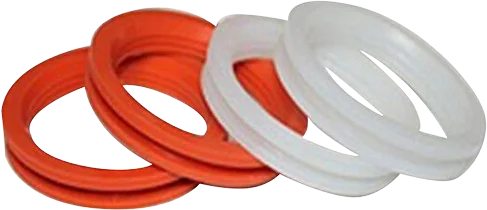
Solid silicone gaskets are dense, durable sealing components that maintain stability across wide temperature ranges. They offer strong compression strength and consistent performance in static and dynamic applications. Best for high-heat equipment, enclosures, and industrial machinery. Consider solid silicone when you need a firm seal with minimal deformation.
Silicone Foam Gaskets
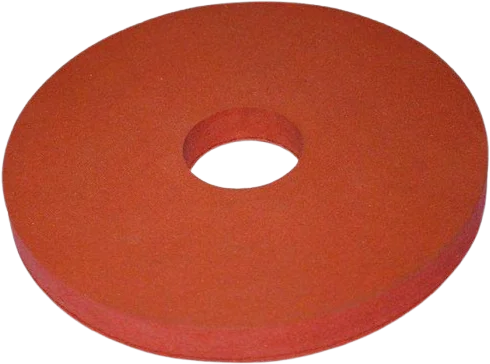
Silicone foam gaskets use a lightweight, low-density structure that absorbs vibration and cushions sensitive components. They provide thermal resistance and environmental sealing while remaining flexible. Best for electronics, HVAC panels, and applications requiring shock absorption. Consider foam if you need a softer seal without adding weight.
Low Durometer Silicone Gaskets
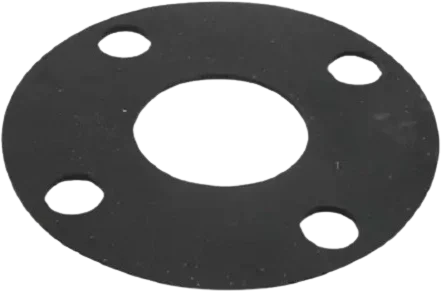
Low durometer silicone gaskets offer soft compression for surfaces that require a gentle, conforming seal. They fill gaps effectively at low bolt loads and maintain elasticity over time. Best for delicate assemblies, uneven surfaces, and equipment with limited fastening force. Consider this type when you need a seal that adapts easily to surface variations.
Platinum-Cured Silicone Gaskets
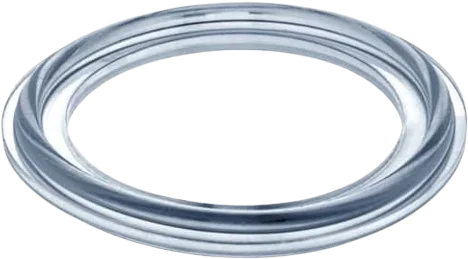
Platinum-cured silicone gaskets are high-purity components with excellent stability, low extractables, and strong resistance to contamination. They meet strict regulatory requirements for sanitary environments. Best for medical devices, pharmaceutical equipment, and clean-processing lines. Consider platinum-cured grades when your application requires the highest material purity.
Fluorosilicone Gaskets
Fluorosilicone gaskets combine silicone flexibility with strong resistance to fuels, oils, and solvents. They maintain performance in chemically harsh conditions and extreme temperatures. Best for aerospace, automotive fuel systems, and chemical-processing equipment. Consider fluorosilicone when your sealing application involves contact with aggressive fluids.
Flat & Custom Die-Cut Silicone Gaskets
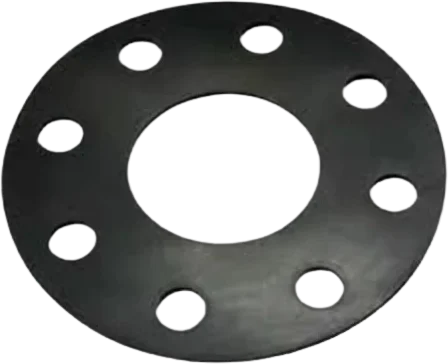
Flat and custom die-cut silicone gaskets are manufactured to your exact dimensions using precision cutting methods. They offer reliable sealing performance for complex shapes and tight tolerances. Best for control panels, custom housings, and OEM assemblies. Consider die-cut options when you need accurate shapes produced from your CAD files or drawings.
FDA-Grade & Food-Safe Silicone Gaskets
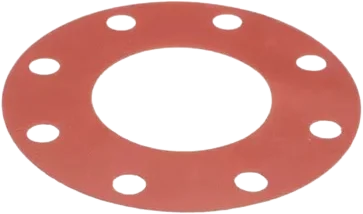
FDA-grade silicone gaskets are manufactured from compliant, non-toxic materials suitable for food contact and sanitary environments. They provide strong thermal resistance and maintain stability during repeated cleaning cycles. Best for food processing equipment, beverage systems, and medical devices. Consider FDA-grade silicone when your operation requires regulated, food-safe sealing.
Silicone Sponge Gaskets
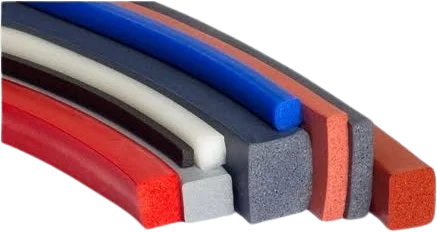
Silicone sponge gaskets are compressible sealing components made from a closed-cell structure that blocks moisture, dust, and air while maintaining consistent cushioning under load. Their flexibility supports uneven surfaces and reduces vibration transfer, making them suitable for enclosures, outdoor equipment, and electronic assemblies exposed to temperature swings.
Molded Silicone Gaskets
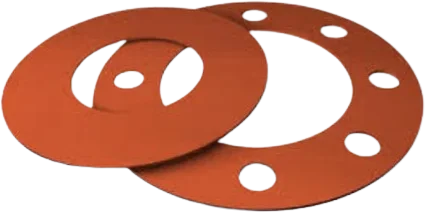
Molded silicone gaskets are formed through compression or injection molding to achieve precise geometries, tight dimensional control, and smooth sealing surfaces. These gaskets work well for OEM assemblies that require repeatable performance, custom shapes, and consistent behavior under mechanical stress or high heat.
What Materials Are Used to Manufacture Silicone Gaskets?
Silicone Gasket Material Comparison Table
The silicone gasket material comparison table is shown below.
| Material | Temperature Range | Durometer (Shore) | Best Applications |
|---|---|---|---|
| Solid Silicone | -60°C to 200°C | 30–80 Shore A | Flange and enclosure sealing |
| Silicone Sponge | -60°C to 180°C | 5–25 Shore 00 | Uneven surfaces, low-pressure sealing |
| Silicone Foam | -60°C to 180°C | 8–35 Shore 00 | Weatherproof and outdoor enclosures |
| Fluorosilicone | -70°C to 175°C | 40–80 Shore A | Fuel and oil-exposed seals |
| FDA-Grade Silicone | -60°C to 200°C | 30–70 Shore A | Food and beverage equipment |
| Platinum-Cured Silicone | -60°C to 200°C | 20–70 Shore A | Medical and cleanroom equipment |
The same compound family drives selection across our broader range of gasket materials: a silicone gasket and a silicone O-ring or hose share the same base chemistry, so the temperature and chemical resistance limits that apply to one apply to all three.
How to Choose the Right Silicone Gasket for Your Needs?
Choosing the right silicone gasket comes down to four steps.
- Confirm the operating temperature range: Match the silicone grade's rated range to the highest and lowest temperature the gasket will see, including any short-term spikes.
- Check compliance requirements: Specify FDA-grade for food or beverage contact and platinum-cured for medical or cleanroom use; standard solid or sponge silicone covers general industrial sealing.
- Match the compression method to the surface: Use solid silicone for flat, rigid mating surfaces under high clamping force, and sponge or foam silicone for surfaces with gaps or irregularities.
- Confirm the cut or mold method: Die-cut silicone gaskets suit flat, 2D profiles at a lower tooling cost; compression-molded silicone suits parts needing a 3D cross-section.
Where Are Silicone Gaskets Commonly Used?
Silicon Gaskets are commonly used for below industries:
Automotive
Silicone gaskets are used in automotive systems that face heat, vibration, and fluid exposure. You’ll find them in engine covers, EV battery housings, lighting assemblies, and emission control units where temperature stability and long-term sealing are essential.
Electronics
Electronics equipment relies on silicone gaskets for moisture sealing, vibration absorption, and enclosure protection. They support IP-rated housings, control panels, communication devices, and outdoor electronic assemblies that need stable performance across wide temperature ranges.
Food Processing
Food-grade silicone gaskets are used in sanitary processing equipment, filling machines, mixers, and high-temperature ovens. Their FDA-compliant formulation prevents contamination and maintains safe sealing in environments exposed to heat, steam, and cleaning chemicals.
Medical Equipment
Medical devices use silicone gaskets for leak-free performance in pumps, diagnostic units, sterilization systems, and sensitive enclosures. Their USP Class VI and platinum-cured grades offer biocompatibility and consistent behavior in regulated environments.
HVAC Systems
HVAC units use silicone gaskets for duct seals, access panels, heating equipment, and systems exposed to wide thermal swings. Silicone’s low compression set and environmental resistance ensure reliable sealing in both hot and cold airflow environments.
Marine & Outdoor Environments
Silicone gaskets perform well in marine and outdoor equipment exposed to salt spray, UV radiation, and weather shifts. They are used in navigation systems, marine enclosures, external lighting, and outdoor machinery where environmental sealing is needed.
What Are Other Gasket Products Like Silicone Gaskets?
RubberXperts manufactures a full range of gasket materials beyond silicone, each suited to a different combination of
chemical exposure, cost, and temperature requirement.
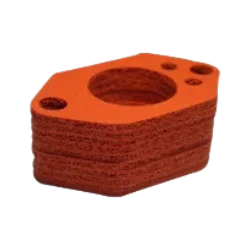
Die Cut Gaskets
Die-cut gaskets are flat gaskets cut to an exact 2D profile from rubber, foam, or plastic sheet stock, covering the same custom silicone gasket and silicone sealing gasket applications as the die-cut silicone option above but across any base material RubberXperts stocks. Die cutting keeps tooling costs low for low-to-mid volume runs, with RubberXperts holding tight profile tolerances across every material in the die-cut line.
Neoprene Rubber Gaskets
Making them a lower-cost alternative to silicone for applications that don't need silicone's extreme temperature range, neoprene rubber gaskets resist moderate oil exposure, weathering, and flame better than most general-purpose rubber.
EPDM Gaskets
For potable water and HVAC applications that stay within EPDM's narrower temperature range, EPDM gaskets resist water, steam, and outdoor weathering at a lower material cost than silicone.
PTFE (Teflon) Gaskets
For chemical-exposure applications that exceed what silicone or fluorosilicone can hold up against, PTFE (Teflon) gaskets resist virtually every industrial chemical and solvent.
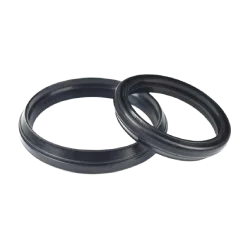
Flange Gaskets
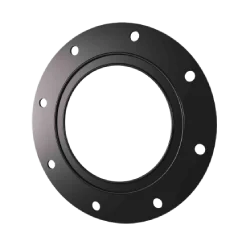
Available in silicone or any other RubberXperts material matched to the flange's pressure and fluid requirements, flange gaskets seal bolted pipe and equipment flanges in a ring profile.
Spliced & Vulcanized Gaskets
Covering large-diameter seals that a single die-cut sheet can't span, spliced and vulcanized gaskets join cut lengths of gasket cord into a continuous ring through heat-cured splicing.
Nitrile (Buna-N) Rubber Gaskets
For automotive and hydraulic sealing applications that don't need silicone's temperature range, nitrile (Buna-N) rubber gaskets resist petroleum oils and fuels at a lower cost than fluorosilicone.
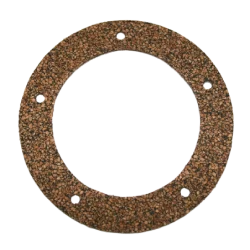
Cork Gaskets
Used where a gasket needs to resist slipping under load rather than resist chemical exposure, cork gaskets provide high friction and vibration dampening at low cost.
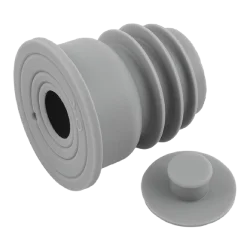
Drain Gaskets
Typically molded in EPDM or rubber compounds rated for continuous water contact, drain gaskets seal plumbing drain fittings against water and waste-line pressure.
Foam Gaskets
Low-pressure sealing role as silicone foam and sponge at a lower material cost, where silicone's temperature range isn't required. Foam gaskets compress under light clamping force across a range of base materials.
The Benefits of Silicone Gaskets
Silicone gaskets outperform standard rubber gaskets across nine key measures.
High-Temperature Stability
Silicone gaskets hold their seal at temperatures up to 200°C continuously, well above what EPDM or neoprene gaskets are rated for.
Chemical and Environmental Resistance
Silicone resists ozone, UV exposure, and weathering better than most rubber compounds, holding its seal through years of outdoor exposure without cracking.
Low Compression Set for Long-Term Sealing
Silicone gaskets return to their original thickness after repeated compression cycles, maintaining sealing force over years of bolted service instead of flattening permanently.
Flexibility Across Wide Temperature Ranges
Silicone stays flexible from -60°C to 200°C, sealing reliably in both cold-storage and high-heat applications without a material change.
FDA-Grade & Medical Compatibility
FDA-compliant and platinum-cured silicone grades meet food-contact and biocompatibility standards that most rubber compounds can't certify to.
Electrical & Vibration Dampening Properties
Silicone's electrical insulating properties and cushioning behavior make it a dual-purpose material for gaskets that also need to dampen vibration or isolate electrical contact.
Custom Formulation Options
RubberXperts formulates silicone compounds to specific durometer, color, and compliance requirements beyond standard off-the-shelf grades.
Cleanroom & High-Purity Manufacturing
Platinum-cured silicone leaves no peroxide byproduct residue, meeting the purity standards cleanroom and medical manufacturing environments require.
Efficient Manufacturing for Complex Shapes
Compression and injection molding produce complex 3D silicone gasket profiles in a single step that would require secondary fabrication in stiffer materials.
Explore More Products We Offer
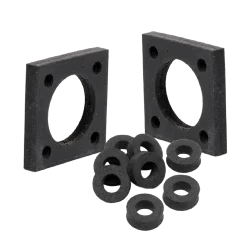
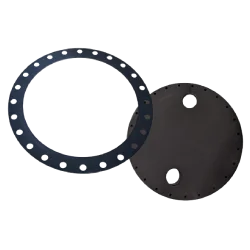
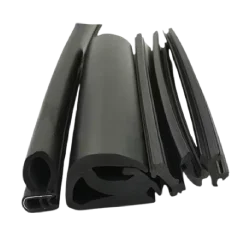
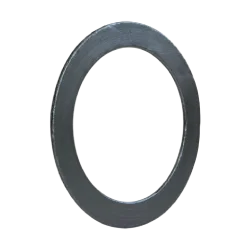
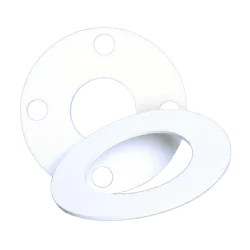
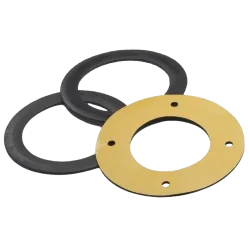
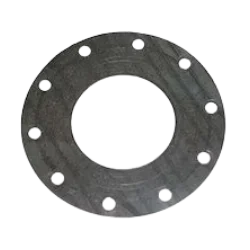
RubberXperts manufactures a full range of rubber components beyond silicone gaskets, including custom silicone gasket variants, O-rings, hoses, pipes, seals, and mounts,
each built with the same material and custom-sizing options as the gaskets above.

Frequently Asked Questions About Silicone Gaskets
Here are the FAQs about our silicone gaskets to help you find the answers you need.
Silicone gaskets last 10-20 years under normal operating conditions, with service life depending on temperature exposure, compression load, and chemical contact.
Silicone gaskets operate from -60°C to 200°C continuously, with short-term spikes tolerated up to 230°C. Understanding gasket resistance is crucial, as silicone shows high performance compared to other materials when exposed to varying temperatures and chemicals.
Silicone rubber gaskets differ from regular rubber gaskets by offering higher temperature stability, better UV/weather resistance, and greater physiological inertness for food and medical use. Regular rubber materials provide stronger oil resistance in applications involving petroleum-based fluids.
Yes, custom silicone gaskets can be manufactured in any shape, thickness, or durometer using die-cutting, molding, or CNC-supported fabrication based on your specifications or CAD files.
Yes, silicone foam gaskets provide effective sealing performance for enclosures that require low closure force, controlled compression, vibration absorption, and thermal insulation.
Silicone rubber for sealing is typically selected in the 30-50 Shore A range, with softer grades improving conformability and harder grades supporting higher mechanical loads.
Silicone gaskets are manufactured in custom dimensions ranging from small precision components to large-format seals, with sizing determined by your design files, samples, or application requirements.
Need Custom Gaskets for Your Application?
Tell us your size, material, quantity or application requirements and our team will provide a competitive quote.
Materials
Manufacturing
& Fast Response
You can upload it with your enquiry.