
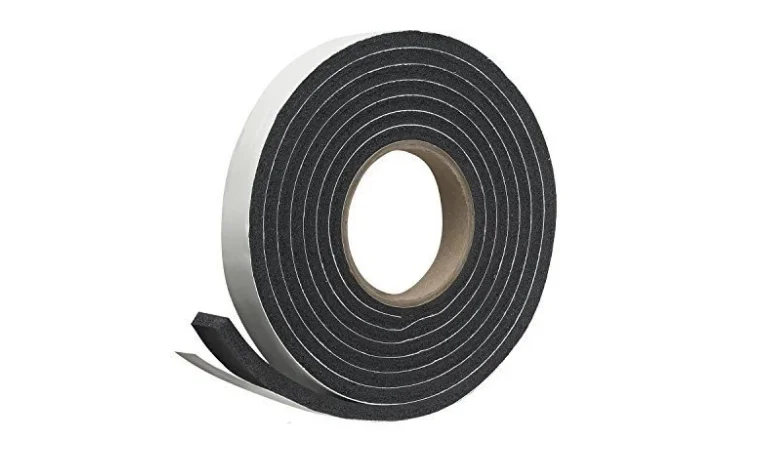
Foam Gaskets
Flexible Sealing, Cushioning & Insulation for Industrial & Enclosure ApplicationsFoam gaskets offer flexible sealing, cushioning, and insulation for applications that require gap filling, vibration damping, and environmental protection. They function as compressible sealing components that conform to uneven surfaces, reducing noise and preventing air or moisture ingress.
Foam gaskets offer good flexibility, recovery, and durability across a wide temperature range, depending on material type. Rubber Xpert Inc. manufactures and supplies custom foam gaskets using precision cutting, multiple foam densities, and bulk production support.
Buy Foam Gaskets in Bulk from a Certified
Manufacturer, Rubber Xperts Inc
Buy foam gaskets in bulk directly from a manufacturer equipped for certified materials, consistent quality control, and precision-cut custom dimensions. Rubber Xpert Inc. supports OEM programs with competitive pricing, fast turnaround, and reliable bulk supply for enclosure, HVAC, and industrial sealing applications.
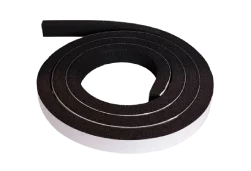
Closed-Cell Foam Gaskets
Closed-cell foam gaskets are engineered for moisture-resistant sealing and compression recovery in applications requiring air- and water-tight performance. They deliver reliable sealing where environmental ingress and vibration are concerns.
- Applications: Electrical Enclosures, Outdoor Equipment, HVAC Panels
- Material Type / Grade: EPDM Foam, Neoprene Foam, PE Foam
- Temperature Range: −40°C to +120°C (Material-Dependent)
- Hardness (Durometer): 20–50 Shore 00
- Thickness Range: 2 mm to 25 mm
- Key Features: Low Water Absorption, Good Recovery, Environmental Sealing
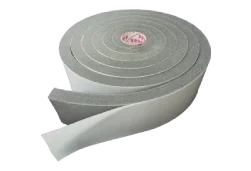
Open-Cell Foam Gaskets
Open-cell foam gaskets are engineered for cushioning, sound absorption, and low-load sealing where airflow and compressibility are needed. They perform well on irregular surfaces under light compression.
- Applications: Electronics Housings, Appliance Panels, Acoustic Damping
- Material Type / Grade: PU Foam, Open-Cell Neoprene
- Temperature Range: −20°C to +90°C
- Hardness (Durometer): 10–30 Shore 00
- Thickness Range: 3 mm to 30 mm
- Key Features: High Compressibility, Sound Absorption, Lightweight
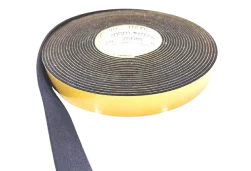
EPDM Foam Gaskets
EPDM foam gaskets are engineered for outdoor durability and weather resistance. They deliver consistent sealing where UV, ozone, and moisture exposure are present.
- Applications: Outdoor Enclosures, HVAC Systems, Construction Joints
- Material Type / Grade: EPDM Closed/Open-Cell Foam
- Temperature Range: −40°C to +120°C
- Hardness (Durometer): 20–45 Shore 00
- Thickness Range: 3 mm to 25 mm
- Key Features: UV/Ozone Resistance, Moisture Sealing, Flexibility
Neoprene Foam Gaskets
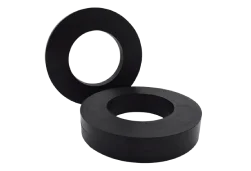
Neoprene foam gaskets are engineered for balanced oil resistance, cushioning, and sealing performance. They perform reliably in general industrial environments.
- Applications: Industrial Panels, Vibration Isolation, Machinery Covers
- Material Type / Grade: Neoprene Foam
- Temperature Range: −35°C to +110°C
- Hardness (Durometer): 20–40 Shore 00
- Thickness Range: 3 mm to 25 mm
- Key Features: Good Recovery, Oil Resistance, Vibration Damping
Silicone Foam Gaskets
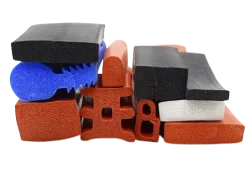
Silicone foam gaskets are engineered for high-temperature and low-temperature sealing with excellent compression recovery. They deliver dependable performance where thermal extremes are present.
- Applications: Electronics, Lighting, High-Temp Enclosures
- Material Type / Grade: Silicone Foam
- Temperature Range: −60°C to +200°C
- Hardness (Durometer): 15–40 Shore 00
- Thickness Range: 3 mm to 20 mm
- Key Features: Wide Temperature Tolerance, Low Compression Set

Adhesive-Backed Foam Gaskets
Adhesive-backed foam gaskets are engineered for fast installation and positional stability. They maintain foam sealing performance while simplifying assembly.
- Applications: Panels, Enclosures, OEM Assemblies
- Material Type / Grade: Foam with PSA Backing
- Temperature Range: Material/Adhesive-Dependent
- Hardness (Durometer): Material-Dependent
- Thickness Range: 2 mm to 20 mm
- Key Features: Easy Installation, Secure Placement, Time-Saving
Custom Foam Gaskets
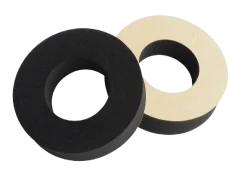
Custom foam gaskets are engineered to application-specific dimensions, densities, and performance needs. They deliver optimized sealing where standard profiles are insufficient.
- Applications: OEM Equipment, Specialized Enclosures
- Material Type / Grade: Custom-Specified Foams
- Temperature Range: Application-Dependent
- Hardness (Durometer): Custom-Specified
- Thickness Range: Custom
- Key Features: Tight Tolerances, Tailored Density, Consistent Performance
Why Buy Foam Gaskets from Rubber Xperts Inc?
Rubber Xperts Inc. uses certified foam materials and engineering-grade manufacturing processes to deliver precision-crafted foam gaskets designed for reliable sealing, cushioning, and insulation. Every gasket is produced under strict quality controls to ensure consistent performance across enclosure, HVAC, and industrial applications.
You buy foam gaskets from Rubber Xpert Inc. because of the following reasons:
- ISO-Certified Manufacturing: Controlled processes for repeatable quality and traceability.
- Industry-Approved Foam Grades: EPDM, neoprene, silicone, PU, and PE foams matched to application needs.
- Advanced Fabrication Capabilities: CNC cutting, die-cutting, kiss-cutting for tight tolerances and clean edges.
- Material Options for Demanding Environments: Solutions for moisture, UV, vibration, and temperature extremes.
- OEM & Bulk Production Support: Scalable output for programs and repeat orders.
- Nationwide Delivery & Volume-Tier Pricing: Reliable logistics with cost efficiency at scale.
- 10,000 sq. ft. Fully Equipped Production Facility: In-house capacity for fast turnaround and consistent output.
What Are Foam Gaskets?
Foam gaskets are compressible sealing components made from cellular materials designed to fill gaps, absorb vibration, and block air, dust, and moisture. Their core function is to provide effective sealing and cushioning between mating surfaces, especially where surface irregularities exist.
Foam gaskets offer high flexibility, good compression recovery, and insulation properties, with performance varying by foam type and density. They also help with noise reduction and vibration damping while maintaining a lightweight profile.
Industries such as HVAC systems, electronics, automotive interiors, and industrial equipment rely on foam gaskets in enclosures. They deliver reliable sealing under low to moderate compression with easy installation.
What Types of Foam Gaskets Are Available?
Closed-Cell Foam Gaskets
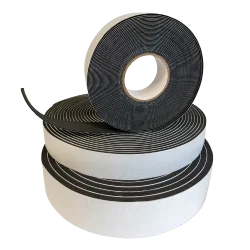
Closed-cell foam gaskets are moisture-resistant seals with sealed cells that prevent air and water ingress. They provide good compression recovery and environmental sealing. Closed-cell foam gaskets are best for outdoor enclosures and HVAC panels. Higher density requires correct compression control.
Open-Cell Foam Gaskets
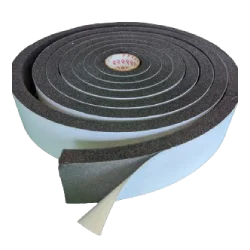
Open-cell foam gaskets are highly compressible and breathable, designed for cushioning and sound absorption. They are best for electronics housings and acoustic applications, but are not suitable for water- or pressure-tight sealing.
EPDM Foam Gaskets
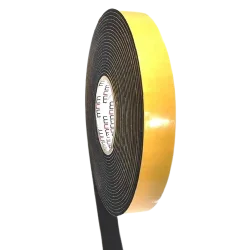
EPDM foam gaskets offer excellent weather, UV, and ozone resistance with stable compression. They are best for outdoor enclosures and construction joints, but have limited resistance to oils and fuels.
Neoprene Foam Gaskets
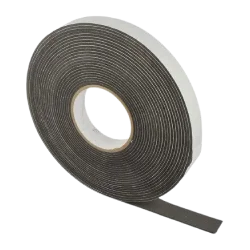
Neoprene foam gaskets provide balanced cushioning, moderate oil resistance, and vibration damping. They are best for industrial panels and machinery covers, but not ideal for prolonged outdoor UV exposure without protection.
Silicone Foam Gaskets
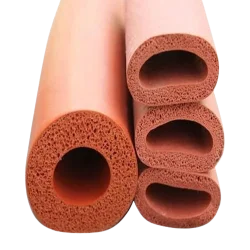
Silicone foam gaskets maintain flexibility across extreme temperatures and provide low compression set. They are best for electronics, lighting, and high/low-temperature enclosures, but its higher material cost than standard foams.
Adhesive-Backed Foam Gaskets
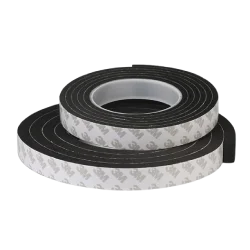
Adhesive-backed foam gaskets simplify installation and positioning. They are best for OEM assemblies and panels, but adhesive temperature limits must be considered.
Custom Foam Gaskets
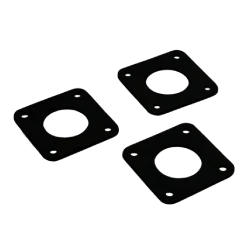
Custom foam gaskets are engineered to exact shapes, densities, and thicknesses. They are best for specialized equipment and OEM designs. Accurate specifications are essential.
What Materials Are Used to Manufacture Foam Gaskets?
Warning: Undefined array key "rubber_product_material_main_desc" in /home/u221192900/domains/rubberxperts.com/public_html/wp-content/themes/rubberexperts/templates/sub-product-details-template-new.php on line 374
The materials used to manufacture foam gaskets include:
- EPDM Foam: A weather-resistant foam offering good flexibility and compression recovery, operating from −40°C to +120°C, with excellent resistance to UV, ozone, and moisture but limited resistance to oils and fuels.
- Neoprene Foam: A versatile foam material providing moderate oil resistance, vibration damping, and flexibility across −35°C to +110°C, suitable for general industrial and enclosure sealing.
- Silicone Foam: A high-performance foam with exceptional thermal stability and low compression set, operating from −60°C to +200°C, and offering excellent chemical and aging resistance.
- Polyurethane (PU) Foam: A lightweight, highly compressible foam designed for cushioning and sound absorption, typically operating from −20°C to +90°C, with limited chemical resistance.
- PVC / PE Foam: Closed-cell foams offering moisture resistance and dimensional stability, operating from −30°C to +80°C, suitable for cost-sensitive sealing and insulation applications.
How to Choose the Right Foam Gasket for Your Needs?
To choose the right foam gasket, you must match the foam type and density to your sealing, cushioning, and environmental requirements.
You can follow these tips to choose the right foam gasket for your needs:
- Compression & Recovery: Select a foam density that achieves effective sealing at the available compression without permanent set.
- Cell Structure: Use closed-cell foams for moisture and air sealing; choose open-cell foams for cushioning and sound absorption.
- Temperature Range: Ensure the foam operates safely within minimum and maximum service temperatures.
- Environmental Exposure: Consider UV, ozone, moisture, and aging resistance for outdoor or enclosure use.
- Chemical Contact: Verify compatibility with oils, cleaners, or process chemicals present.
- Installation Method: Decide on adhesive-backed options for ease of assembly and positional stability.
- Dimensional Tolerances: Specify thickness and profile accurately to ensure consistent compression and performance.
Where Are Foam Gaskets Commonly Used?
Foam gaskets are widely used where flexible sealing, cushioning, and environmental protection are required, especially in low to moderate-pressure applications.
The places where foam gaskets are commonly used include:
Electrical Enclosures & Panels
Foam gaskets seal enclosure doors and panels to block dust and moisture, improve IP protection, and protect sensitive electrical components.
HVAC Systems
They are used in ducts, air handlers, and access panels to reduce air leakage, absorb vibration, and improve energy efficiency.
Automotive Sealing & NVH
Foam gaskets help seal interior panels, HVAC modules, and trim components while reducing noise, vibration, and harshness.
Electronics & Appliances
They provide cushioning and sealing for housings, displays, and control panels, protecting against dust ingress and vibration.
Industrial Equipment
Foam gaskets are applied in machinery covers and access points to provide flexible sealing and reduce mechanical vibration.
Doors, Windows & Weather Sealing
They are used for weatherstripping to block air, water, and dust while maintaining flexibility over repeated open–close cycles.
Gaskets for your use case?
Compression Guidelines
Foam Gasket compression guidelines involve the following:
Recommended Compression Range
Foam gaskets typically perform best at 20–40% compression, depending on foam type and density.
Avoid Over-Compression
Excessive compression can cause permanent deformation, loss of recovery, and reduced sealing effectiveness.
Match Foam Density to Load
Lower-density foams require lighter clamping force, while higher-density foams tolerate higher loads.
Uniform Compression
Apply even fastening pressure across the sealing surface to prevent localized gaps or premature wear.
Allow Recovery Margin
Foam gaskets rely on elastic recovery, so compression should stay within design limits for long-term performance.

Frequently Asked Questions
Here are some frequently asked questions about our Foam Gaskets to help you find the answers you need:
Foam density determines compression force and recovery. Select a lower density for light loads and a higher density for tighter sealing.
Yes, closed-cell foam gaskets block water ingress. Open-cell foams are not suitable for waterproof sealing.
Thickness depends on gap size and compression range. The gasket should compress 20–40% to seal effectively.
Yes, foam gaskets absorb vibration and reduce noise. Material type and density influence damping performance.
All foams age gradually. Correct material selection and proper compression minimize compression set and performance loss.
Yes, foam gaskets can be die-cut or CNC-cut to precise shapes and tight tolerances for custom applications.
Need Custom Gaskets for Your Application?
Tell us your size, material, quantity or application requirements and our team will provide a competitive quote.
Materials
Manufacturing
& Fast Response
You can upload it with your enquiry.