Reliable Sealing Solutions for Industrial, Plumbing & Pipeline Applications
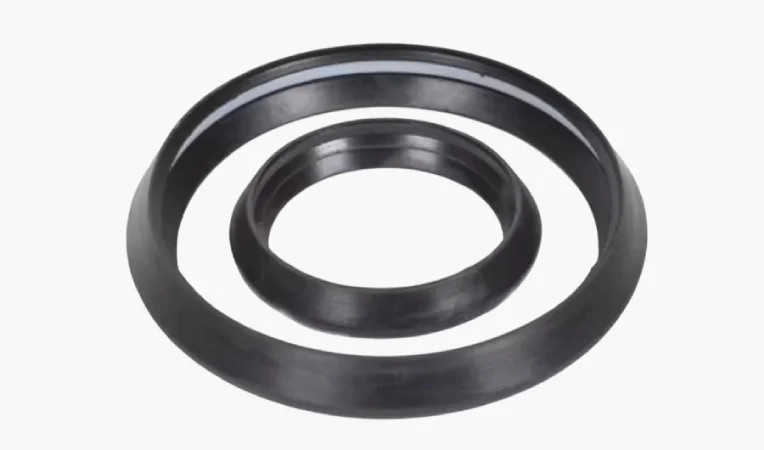
Pipe gaskets provide reliable sealing between pipe joints and flange connections to prevent fluid, gas, and pressure leakage in piping systems. They function as critical sealing components that absorb surface irregularities, support pressure containment, and reduce vibration across connected pipe sections.
Pipe gaskets offer dependable performance across different temperatures, pressures, and media types, depending on material selection.
Rubber Xpert Inc. manufactures and supplies custom pipe gaskets with precision cutting, certified materials, and bulk production capabilities for industrial and pipeline applications.
Buy Pipe Gaskets in Bulk from a Certified Manufacturer, Rubber Xperts Inc
Buy pipe gaskets in bulk directly from a manufacturer equipped for certified materials, consistent quality control, and precision-cut custom dimensions. Rubber Xperts Inc. supports OEM requirements with competitive pricing, fast turnaround, and reliable bulk supply for plumbing, pipeline, and industrial sealing systems.
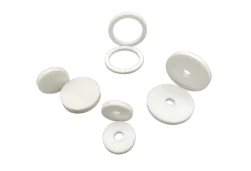
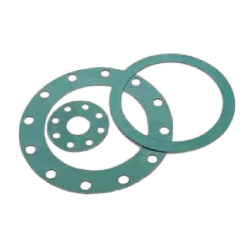
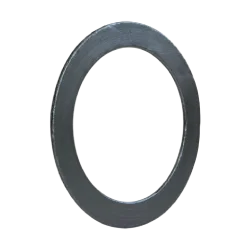
Flat Pipe Gaskets
Flat pipe gaskets are engineered for general-purpose sealing in pipe joints requiring uniform load distribution, durability, and pressure stability. They deliver reliable sealing performance where consistent surface contact and controlled compression are critical.
Applications: Water Pipelines, HVAC Piping, Industrial Fluid Transfer
Material Type / Grade: EPDM, NBR, Neoprene, PTFE
Temperature Range: −40°C to +260°C (Material-Dependent)
Hardness (Durometer): P60–80 Shore A (Rubber Types)
Thickness Range: 1 mm to 6 mm
Key Features: Even Load Distribution, Versatile Material Options, Easy Installation
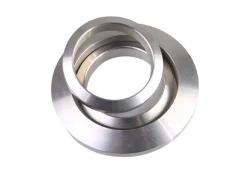
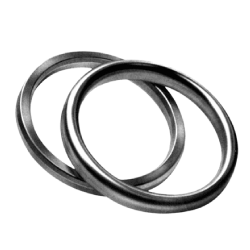
Ring-Type Pipe Gaskets
Ring-type pipe gaskets are engineered for flange joints requiring focused sealing stress and improved pressure handling. They perform reliably where higher internal pressure and tighter sealing control are required.
Applications: Oil & Gas Pipelines, Industrial Process Piping
Material Type / Grade: PTFE, Graphite, Rubber Composites
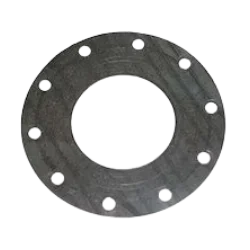
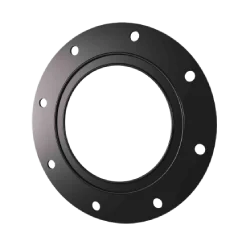
Full-face pipe gaskets are engineered to cover the entire flange surface, including bolt holes, providing added protection and load distribution. They deliver consistent sealing where flange alignment and vibration are concerns.
Applications: Low-Pressure Piping, Water Treatment Systems
Material Type / Grade: EPDM, NBR, Fiber Composites
Temperature Range: −40°C to +150°C
Hardness (Durometer): 60–75 Shore A
Thickness Range: 1.5 mm to 6 mm
Key Features: Full Flange Coverage, Bolt-Hole Protection, Vibration Damping
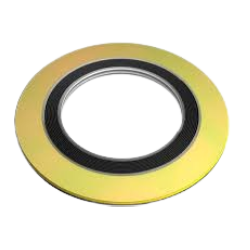
Spiral Wound Pipe Gaskets
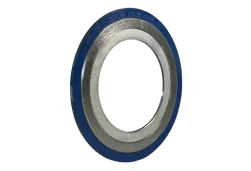
Spiral wound pipe gaskets are engineered for high-pressure and high-temperature sealing applications requiring resilience and recovery. They perform reliably in environments with thermal cycling and fluctuating pressure.
Applications: Power Plants, Refineries, Chemical Processing
Material Type / Grade: Stainless Steel Windings with Graphite or PTFE Filler
Temperature Range: −200°C to +450°C (Filler-Dependent)
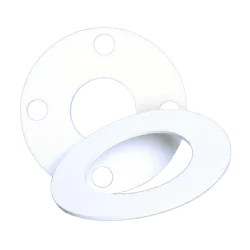
PTFE pipe gaskets are engineered for chemically aggressive environments requiring inertness and high-temperature stability. They deliver dependable sealing where corrosion and contamination must be avoided.
Applications: Chemical Pipelines, Food & Beverage Systems
Material Type / Grade: Virgin PTFE, Filled PTFE
Temperature Range: −200°C to +260°C
Hardness (Durometer):Not Applicable
Thickness Range: 1.5 mm to 6 mm
Key Features: Chemical Inertness, Non-Contaminating, Wide Temperature Tolerance
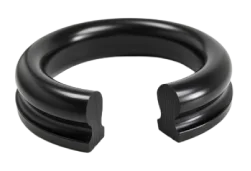
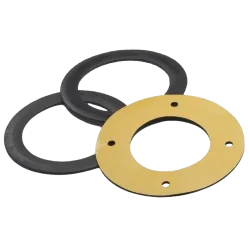
Rubber Pipe Gaskets
Rubber pipe gaskets are engineered for flexible sealing and vibration absorption in low- to medium-pressure piping. They provide effective sealing where movement and surface variation are present.
Custom pipe gaskets are engineered for application-specific piping systems requiring precise fit, material compatibility, and controlled tolerances. They deliver optimized sealing where standard gasket sizes are insufficient.
Key Features: Tight Tolerances, Material Flexibility, Tailored Performance
Why Buy Pipe Gaskets from Rubber Xperts Inc?
Rubber Xperts Inc. uses certified gasket materials and engineering-grade manufacturing processes to deliver precision-crafted pipe gaskets designed for durability, sealing accuracy, and consistent performance across piping systems.
Every gasket is produced under strict quality controls to ensure reliability in pressure, temperature, and fluid-handling environments.
Reasons to buy pipe gaskets from Rubber Xperts Inc include:
ISO-Certified Manufacturing: Documented processes ensure repeatable quality, traceability, and compliance.
Industry-Approved Material Grades: EPDM, NBR, PTFE, graphite, and composites selected for pressure, temperature, and media compatibility.
Advanced Fabrication Capabilities: CNC cutting, die-cutting, and forming for tight tolerances and accurate profiles.
Material Options for Demanding Environments: Solutions for corrosive media, thermal cycling, and vibration.
OEM & Bulk Production Support: Scalable output for projects, maintenance programs, and repeat orders.
Nationwide Delivery & Volume-Tier Pricing: Reliable logistics with cost efficiency for bulk procurement.
10,000 sq. ft. Fully Equipped Production Facility: In-house capacity for fast turnaround and consistent output.
Custom Pipe Gasket Manufacturing — From Specification Sheet to Final Delivery
01
Requirements Definition
We review the operating pressure, temperature range, fluid media, pipe size, flange standard, and tolerance limits to define sealing performance targets.
02
Design & Specification
Our engineers create detailed CAD models covering gasket geometry, bolt-hole layout, thickness, and sealing surfaces. All models are aligned to applicable standards.
03
Material Selection
We select materials such as EPDM, NBR, PTFE, graphite, or composite fibers based on chemical compatibility, pressure class, and thermal limits.
04
Prototyping & Validation
We produce the prototype gaskets for fit-up checks, compression behavior, and dimensional verification before production approval.
05
Manufacturing
Your approved designs move into CNC cutting, die-cutting, or forming processes to maintain consistent tolerances at scale.
06
Quality Assurance
Each batch of pipe gasket undergoes dimensional inspection, material verification, and compliance checks against specified tolerances and standards.
07
Packaging & Delivery
The finished pipe gaskets are packaged for protection, labeled for traceability, and delivered through reliable logistics channels.
What Are Pipe Gaskets?
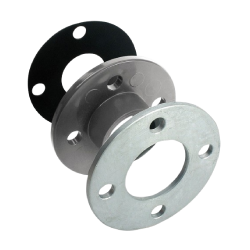
Pipe gaskets are sealing components installed between pipe joints or flanged connections to create a leak-tight seal. Their primary function is to prevent the escape of liquids or gases while maintaining pressure integrity across connected piping sections.
Pipe gaskets provide effective sealing by compensating for surface irregularities, supporting pressure containment, and absorbing vibration. Depending on material choice, pipe gaskets also offer temperature resistance, chemical compatibility, and insulation properties.
Industries like plumbing, pipelines, HVAC, oil and gas, and industrial fluid systems rely on pipe gaskes because they ensure safe, efficient, and long-term operation of piping networks.
What Types of Pipe Gaskets Are Available?
Flat Pipe Gaskets
Flat Pipe Gaskets
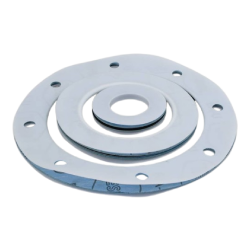
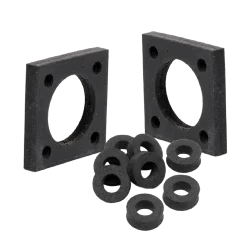
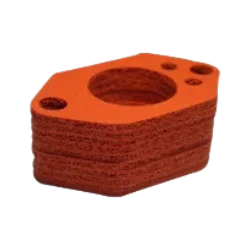
Flat pipe gaskets are simple, full-contact sealing components placed between pipe flanges. They provide uniform load distribution and dependable sealing. Flat pipe gaskets are best for water lines, HVAC, and low- to medium-pressure piping. Selection should consider material compatibility and flange surface finish.
Ring-Type Pipe Gaskets
Ring-Type Pipe Gaskets
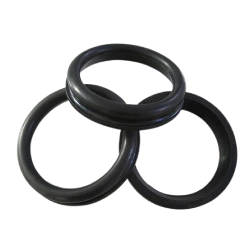
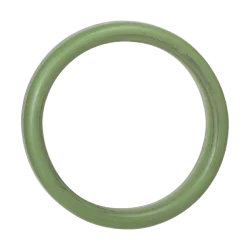
Ring-type pipe gaskets seal only the raised face area of flanges, concentrating sealing stress. They offer improved pressure handling, and are best for oil & gas and industrial process piping. Correct sizing and flange standard matching are critical when choosing ring-type pipe gaskets.
Full-Face Pipe Gaskets
Full-Face Pipe Gaskets
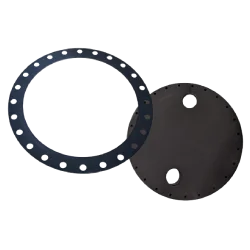
Full-face pipe gaskets cover the entire flange surface, including bolt holes, offering added protection and vibration control. They are best for low-pressure systems and water treatment, but are not ideal for high-pressure or high-temperature services.
Spiral Wound Pipe Gaskets
Spiral Wound Pipe Gaskets
Spiral wound pipe gaskets combine metal windings with soft fillers for resilience. They handle high pressure and temperature with excellent recovery. Spiral wound pipe gaskets are best for refineries, power plants, and chemical processing. Ehowever, they require controlled bolt load and proper flange finish.
PTFE Pipe Gaskets
PTFE Pipe Gaskets
PTFE pipe gaskets provide chemically inert, non-contaminating sealing. They perform across extreme temperatures. These pipes are perfect for chemical, food-grade, and corrosive services, but cold flow must be managed with correct compression.
Rubber Pipe Gaskets
Rubber Pipe Gaskets
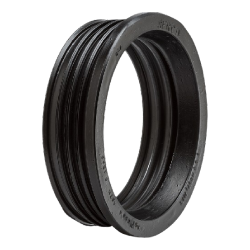
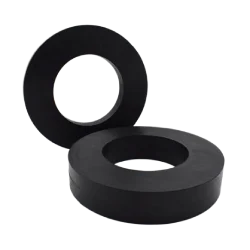
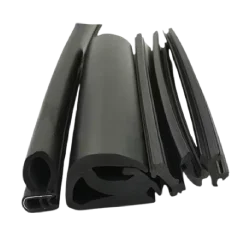
Rubber pipe gaskets offer flexible sealing and vibration damping. They suit low- to medium-pressure systems. Rubber pipe gaskets are best for plumbing and HVAC, but the material choice must match fluid and temperature exposure.
Custom Pipe Gaskets
Custom Pipe Gaskets
Custom pipe gaskets are manufactured to exact dimensions and specifications. They ensure optimal sealing where standard sizes fail. Custom pipe gaskets are best for OEM and specialized piping. Accurate tolerances and application data are essential.
What Materials Are Used to Manufacture Pipe Gaskets?
The materials used to manufacture pipe gaskets include:
EPDM: A flexible elastomer with excellent resistance to water, steam, and weathering. It operates from −40°C to +150°C and is suitable for outdoor, HVAC, and water piping with mild chemical exposure.
Nitrile (NBR): An oil- and fuel-resistant rubber offering good flexibility and sealing performance from −30°C to +120°C. It is ideal for pipelines handling hydrocarbons and lubricants.
Neoprene: A balanced rubber material providing moderate oil resistance, good flexibility, and weather stability across −35°C to +120°C. It is commonly used in general industrial piping.
PTFE (Teflon): A rigid, chemically inert material with minimal flexibility but exceptional chemical resistance and a wide temperature range of −200°C to +260°C. It is used for corrosive and high-purity services.
Graphite: A high-temperature sealing material with limited elasticity but excellent thermal and chemical resistance. It is capable of operating above +450°C in demanding pressure applications.
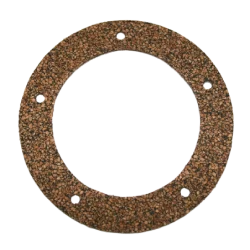
Fiber/Composite Materials: Reinforced gasket materials offering controlled compressibility, moderate flexibility, and resistance to oils, fuels, and steam within −40°C to +200°C. It is suitable for industrial pipe flanges.
Pipe Gasket Material Comparison Table
Material
Operating Temperature
Compression Set
Chemical Resistance
Cost
Best For
EPDM
−40°C to +150°C
Low
Excellent (Water, Steam, Mild Chemicals)
Low
Water Lines, HVAC, Outdoor Piping
Nitrile (NBR)
−30°C to +120°C
Moderate
Excellent (Oils, Fuels, Hydrocarbons)
Low–Medium
Oil & Gas, Fuel Pipelines
Neoprene
−35°C to +120°C
Moderate
Good (Water, Mild Oils)
Medium
General Industrial Piping
PTFE (Teflon)
−200°C to +260°C
Low (Creep-Prone)
Excellent (Near-Universal)
Medium–High
Chemical, Food-Grade, Corrosive Services
Graphite
−200°C to +450°C
Very Low
Excellent (High-Temp, Aggressive Media)
High
High-Temperature, High-Pressure Pipelines
Fiber / Composite
−40°C to +200°C
Low–Moderate
Good (Oils, Steam)
Medium
Industrial Flange Sealing
How to Choose the Right Pipe Gasket for Your Needs?
To choose the right pipe gasket for your needs, match sealing performance to operating conditions, safety requirements, and compliance standards to prevent leaks and premature failure.
Here are tips to choose the right pipe gasket for your needs:
Temperature Range: Select a gasket material rated for both normal and peak operating temperatures.
Durometer (Hardness): Choose an appropriate hardness to balance flexibility and sealing force under load.
Pressure/Sealing Force: Ensure the gasket can withstand internal pressure and available bolt load without extrusion.
Chemical/Fluid Compatibility: Verify resistance to conveyed fluids, gases, or process chemicals.
Compliance Standards: Confirm conformity with FDA, RoHS, ASTM, or UL where regulated use applies.
Dimensional Tolerances: Specify accurate inner/outer diameters and thickness to ensure proper flange fit and uniform compression.
Where Are Pipe Gaskets Commonly Used?
Pipe gaskets are essential sealing components across multiple industries where fluid containment, pressure integrity, and system reliability are necessary. Their role varies by application, but the goal remains the same: prevent leaks and maintain safe pipe connections.
Industries where pipe gaskets are commonly used are:
Water & Plumbing Systems
Pipe gaskets seal joints in water supply and drainage lines. They ensure leak prevention, pressure stability, and long service life in residential and commercial plumbing.
Oil & Gas Pipelines
In oil and gas pipelines, pipe gaskets provide secure sealing under high pressure and exposure to hydrocarbons. It supports safe transport and reducing the risk of leakage.
Chemical Processing Plants
Pipe gaskets are used to seal piping that carries corrosive or reactive chemicals, delivering chemical compatibility and maintaining containment under elevated temperatures.
HVAC & Utility Piping
In HVAC and utility systems, pipe gaskets help maintain airtight and watertight joints. They improve system efficiency and minimizing vibration and energy loss.
Power Generation
Pipe gaskets support sealing in steam, cooling, and process piping. They handle high temperatures and pressure fluctuations critical to continuous power plant operation.
Industrial Fluid Transfer Systems
Pipe gaskets are used in pumps, valves, and transfer lines to ensure consistent fluid containment, reduce downtime, and protect equipment from leakage-related damage.
Need help choosing the best Pipe Gasket for your use case?
Here are some frequently asked questions about our Pipe Gasket to help you find the answers you need:
The purpose of a pipe gasket is to prevents fluid or gas leakage while maintaining pressure integrity.
The best material for pipe gaskets depends on temperature, pressure, and fluid type. EPDM suits water, NBR suits oils, and PTFE suits chemicals.
Yes, pipe gaskets can handle high pressure when correctly selected. Spiral wound and graphite pipe gaskets are designed for high-pressure applications.
No, pipe gaskets are not reusable after removal. Once compressed, most pipe gaskets lose sealing effectiveness and should be replaced.
Properly specified pipe gaskets last 5–10 years, depending on operating conditions and material choice.
Yes, pipe gaskets need to meet compliance stands. Certain applications require compliance with FDA, ASTM, RoHS, or UL standards based on industry regulations.
Customer Reviews and Testimonials
Ryne Pfeifer
"We recently purchased rubber gaskets from Rubber Xperts INC. and were thoroughly impressed with their service. The team demonstrated a high level of professionalism and ensured we received top-quality products. Their assistance throughout the process was invaluable, and they delivered everything on time. We highly recommend Rubber Xperts INC. for their exceptional quality and outstanding customer support."
Remya Varughese
"Our dairy organization has been partnering with Rubber Xperts INC. for a while now, and we frequently procure silicone dairy hoses from them. Their customer service and engineering team are outstanding, always ensuring we receive the best products and support. This partnership has been a great success, and we highly recommend Rubber Xperts INC. for their professionalism, quality, and reliability."
What are rubber D-ring seals? Learn their functionalities, industry uses, installation methods, lifespan factors, benefits, and how they differ from O-ring seals.
What is an industrial gasket? Explore types, applications, materials, installation process, compliance standards, and the three main gasket categories.
What is a high temperature gasket? Explore materials, features, selection criteria, applications, uses, gasket types, and heat-resistant vs. high-temp comparison.
With years of experience in hydraulic and pneumatic systems, Rubber Xperts INC makes top-quality rubber products like rubber o-rings, rubber seals, rubber pipes, rubber extrusions, rubber gaskets, rubber mounts, rubber hoses, and more.
We cater to various industries such as construction, aviation, agriculture, and marine. Quality is our priority, ensuring you get the best possible experience and product.
Our team can locate any product for you such as Seals, O-Rings, Gaskets, Pipes, Hoses, and more. If you need help finding a very specific product, reach out to us by phone, email, or contact form. If it exists, we'll find it for you.
Call us at +1 (817) 614 1836
We're available Monday-Friday from 8:00 AM to 6:00 PM EST, and Saturday from 8:00 AM to 12:00 PM EST.
First-class customer support
Top-notch customer support from us, whether it's before or after your purchase.
Easy and hassle-free
Buy easily through our website or just give us a call.
Flexible ordering and packing solutions
Customize your ordering and packing preferences with our flexible solutions tailored to your needs.