

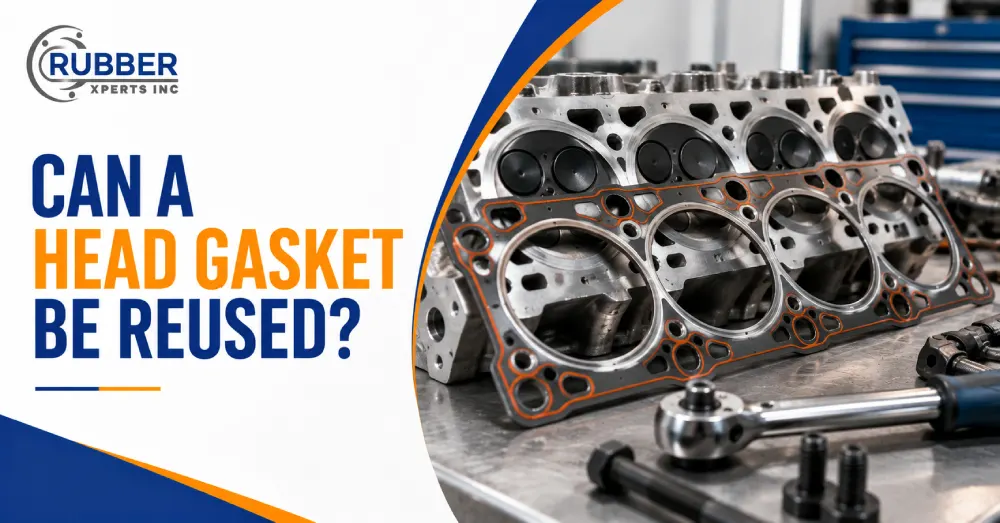
Head gaskets should not be reused after they have been removed. A head gasket is compressed between the engine block and cylinder head to create a seal around the combustion chambers, coolant passages, and oil passages during installation. Removing the cylinder head can change the gasket’s sealing characteristics, making it unreliable for another installation.
Solid copper head gaskets may be reusable when their design and application allow it, provided the gasket is in suitable condition, and the manufacturer or engine builder permits reuse.
Modern head gaskets are made from multi-layer steel (MLS), composite, or other non-rubber constructions. Rubber gaskets and other elastomeric materials are more commonly used for other engine components, such as valve covers, where the sealing requirements differ.
Why Are Head Gaskets Designed for Single Use Only?
Head gaskets are generally designed for single installation because they are compressed and formed against the mating surfaces when the cylinder head is torqued into place.
The cylinder-head bolts apply substantial clamping force across the gasket. This compression allows the gasket to seal the combustion chambers and fluid passages while accommodating minor surface irregularities between the engine block and cylinder head.
Once the head is removed, the gasket may no longer have the same compressed profile or sealing characteristics. It may have experienced permanent deformation, surface damage, or loss of its original sealing properties, even if it looks intact.
Manufacturers generally specify installing a new head gasket whenever the cylinder head is removed.
What Happens If You Try to Reuse an Old Head Gasket?
Reusing an old head gasket can prevent the engine from forming a reliable seal between the cylinder head and engine block.
A failed seal can allow combustion gases to escape, coolant to enter the combustion chambers or oil passages, or engine oil and coolant to mix. The resulting loss of sealing can cause poor engine performance and loss of compression.
A leaking head gasket allows combustion gases into the cooling system or causes coolant loss, increasing the risk of engine overheating. Continued operation with inadequate sealing can cause further damage to the cylinder head, engine block, or other components.
The exact outcome depends on where and how the gasket fails, but replacing the gasket is generally far less risky than relying on a previously compressed gasket whose sealing ability cannot be guaranteed.
Are There Any Types of Head Gaskets That Can Be Reused?
Yes, some specialized head gaskets can be reused, but this is not the norm for modern head gaskets.
Solid copper head gaskets are an example that may be reusable in specialized or high-performance engine applications. However, reuse depends on the manufacturer or engine builder and the gasket’s condition.
The gasket should not be considered reusable simply because it is made from copper or another durable material. There must be a necessary inspection if there are deformations, damages, corrosion, or other conditions that could compromise the seal of a solid copper gasket.
The manufacturer’s installation and reuse instructions should take priority over general recommendations for this type of head gasket.
Copper Head Gasket Reusability vs. MLS
Copper and multi-layer steel (MLS) head gaskets differ significantly in construction and typical applications.
| Factor | Copper Head Gasket | MLS Head Gasket |
|---|---|---|
| Construction | Solid copper | Multiple layers of steel |
| Typical applications | Specialized and performance engines | Many modern production engines |
| Reusability | May be reusable in specific applications | Generally replaced after removal |
| Surface requirements | Depends on the application | Requires appropriate mating-surface condition |
| Reuse decision | Depends on condition and application requirements | Replacement is generally recommended |
| Inspection | Important before reuse | A new gasket is normally preferred |
A solid copper gasket offers reuse potential when it was designed for that purpose and remains in suitable condition. In contrast, MLS gaskets are generally replaced after removal to ensure reliable sealing.
Following the engine manufacturer’s specifications is the safest approach rather than assuming that an MLS or copper head gasket material can always be reused.
Can Valve Cover Gaskets Be Reused?
Valve cover gaskets can be reused if they are not hardened, cracked, flattened, or deteriorated.
Valve cover gaskets are specialized sealing components commonly made from rubber or elastomeric materials like nitrile (Buna-N) gaskets. They seal the joint between the valve cover and cylinder head and primarily prevent engine oil from escaping.
This type of rubber gasket’s sealing behavior differs from that of a head gasket. A valve cover gasket’s material and construction do not contain combustion pressure different from a head gasket’s.
Reusability of a rubber valve cover gasket should not be used as evidence that a removed head gasket can also be reused.
Can High-Performance Gaskets Like PTFE (Teflon) or Nitrile (Buna-N) Be Reused?
No, PTFE and nitrile (Buna-N) gaskets are not automatically reusable simply because of their material.
PTFE is valued for its chemical resistance and ability to perform across a broad range of applications, while nitrile is commonly selected for its resistance to petroleum-based oils and fuels. These materials are used in various sealing applications, but they are not typical materials for modern MLS head gaskets.
Whether a nitrile or PTFE gasket can be reused depends on its specific design, compression, deformation, exposure to heat and fluids, and manufacturer instructions.
The important distinction is that material properties and reusability are separate considerations. A gasket must be designed and approved for reuse before it should be installed again.
How Do Head Gaskets Seal the Engine Block and Cylinder Head?
A head gasket seals the joint between the engine block and cylinder head while keeping combustion gases, engine oil, and coolant in their respective passages.
The gasket contains openings that correspond to the engine’s cylinders, coolant passages, and oil passages. When the cylinder head is installed and the bolts are tightened, the resulting clamping force compresses the gasket between the two mating surfaces.
This compression allows the gasket to conform to the surfaces and maintain separation between the different fluids and gases. At the same time, it must withstand high combustion pressures and repeated changes in engine temperature.
Proper sealing therefore depends on more than the gasket itself. The correct gasket, suitable surface condition, proper bolt torque, and specified tightening sequence all contribute to a reliable seal.
What Are the Common Signs of a Blown or Failing Head Gasket?
A failing head gasket can produce several symptoms, although none of these signs alone necessarily confirms a gasket failure.
Common symptoms include:
- Engine overheating: A gasket failure can allow coolant to escape or combustion gases to enter the cooling system.
- Coolant loss: Coolant may leak externally or enter the combustion chamber or engine oil.
- White exhaust smoke or steam: Coolant entering a combustion chamber can produce visible exhaust vapor, particularly when the engine is warm.
- Loss of engine performance: A damaged gasket can allow compression to escape from a cylinder.
- Low compression: A leak between the cylinder and another passage can reduce cylinder pressure.
- Contaminated engine oil: Coolant entering the oil system can create a milky or unusually contaminated appearance.
- Abnormal cooling-system pressure: Combustion gases entering the cooling system can cause unusual pressure or bubbling.
Because these symptoms can overlap with other engine problems, proper diagnosis is important before removing the cylinder head or replacing the gasket. Compression testing, leak-down testing, cooling-system testing, and other diagnostic procedures may be used depending on the symptoms.
How Much Does It Cost to Replace a Head Gasket?
Replacing the head gasket can be an expensive repair, as labor can often comprise a good portion of the total cost. The exact price will depend on your vehicle, engine design, labor rates, gasket type, and the condition of the engine.
The total repair may include:
- Replacement head gasket
- Labor for removing and reinstalling the cylinder head
- New cylinder-head bolts when required
- Cylinder-head inspection or machining
- Engine oil and coolant replacement
- Additional repairs caused by overheating or gasket failure
The cost can increase substantially if the engine has been operated for an extended period with a failed head gasket. Overheating can damage or distort the cylinder head and may create additional repair requirements.
Trying to reuse an old gasket to avoid the cost of a replacement can therefore be a poor trade-off if the gasket fails and requires the cylinder head to be removed again.
What Are the Best Practices for Installing a New Head Gasket?
Proper installation is essential because even a new head gasket can fail if the mating surfaces, fasteners, or installation procedure are incorrect.
- Use the correct gasket: Select a gasket designed for the specific engine and application.
- Clean the mating surfaces: Remove old gasket material, oil, coolant, and other contamination without damaging the engine block or cylinder head.
- Inspect the surfaces: Check for warping, cracks, corrosion, or other damage that could prevent proper sealing.
- Check surface requirements: Ensure the block and cylinder-head surfaces meet the specifications required for the particular gasket.
- Install the gasket correctly: Follow the manufacturer’s orientation and installation markings.
- Follow the correct torque sequence: Tighten the cylinder-head bolts in the specified order and stages to distribute clamping force evenly.
- Use the specified torque procedure: Follow the manufacturer’s torque values and any required angle-tightening procedure.
- Replace bolts when required: Some cylinder-head bolts are torque-to-yield fasteners and are intended for one-time use.
- Follow manufacturer instructions: Use the engine-specific installation procedure instead of relying solely on generic head-gasket installation advice.
- Apply sealant only when specified: Do not automatically add gasket sealer. If sealant is required, use the specified type and apply it only to the designated areas and in the recommended amount.
- Follow the correct torque sequence: Tighten the cylinder-head bolts in the specified order to distribute clamping force evenly across the gasket and reduce the risk of uneven sealing or cylinder-head distortion.
- Use the correct tightening stages: Some engines require several torque stages followed by an angle-tightening procedure. Use a calibrated torque wrench and follow the exact specifications for the engine.
- Check for leaks after reassembly: Once the engine is running, inspect for coolant and oil leaks and monitor the engine for abnormal operating temperatures.
- Verify fluid levels: Check the engine oil and coolant levels after installation and replenish them according to the manufacturer’s specifications.
- Follow any required post-installation procedure: If the engine manufacturer specifies retorquing, rechecking, or another post-installation procedure, complete it at the required time or operating interval.
- Document and follow the correct reassembly sequence: Keep track of hoses, wiring, fasteners, and components during disassembly to ensure everything is correctly reinstalled.