
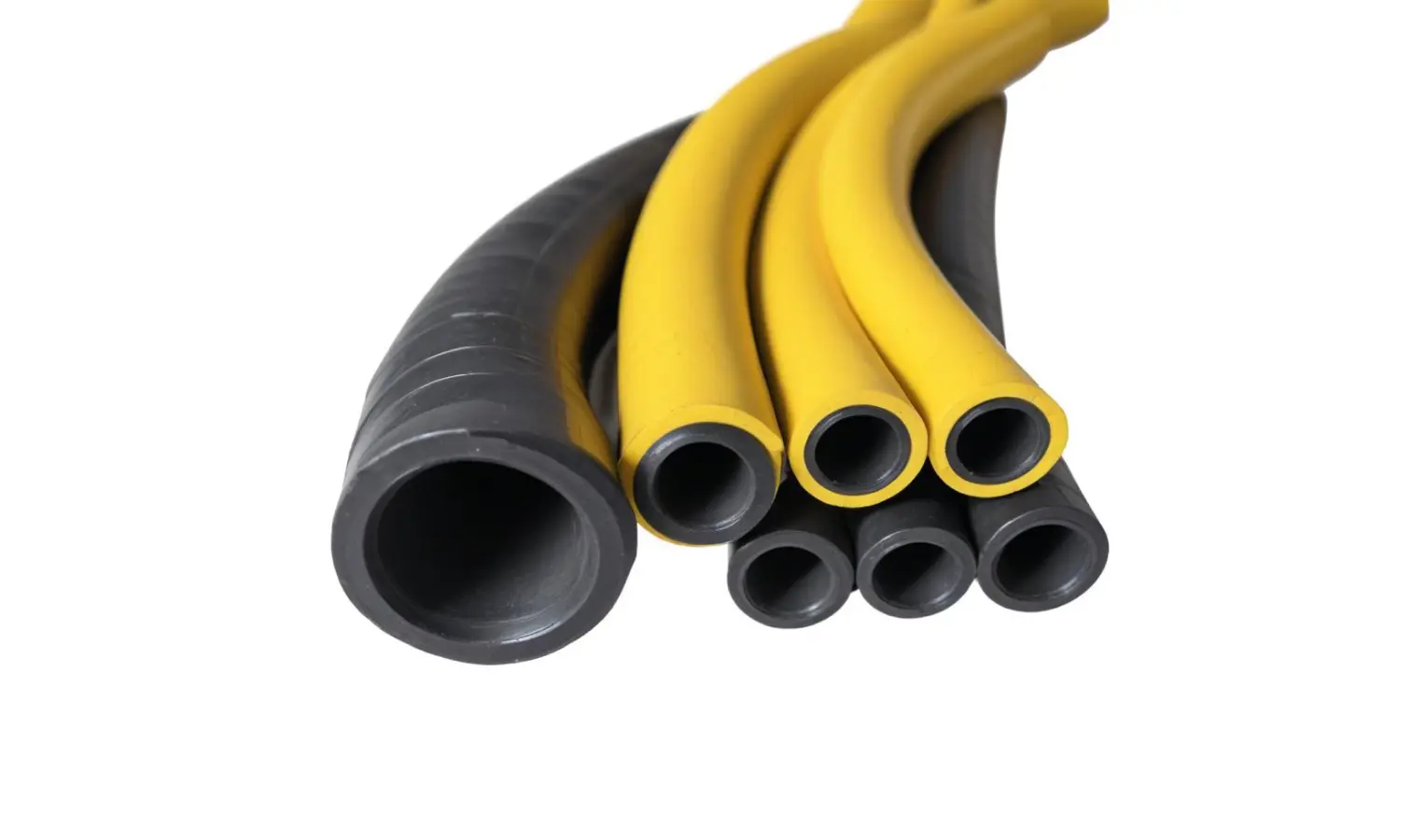
Rubber Hoses
Rubber Xperts supplies rubber hoses for industrial, commercial, and mechanical fluid-transfer systems. Rubber hoses are made in standard and custom sizes, with material and reinforcement options matched to the operating pressure, temperature, and fluid type. Discover our extensive range of rubber products, including seals, gaskets, and pipes.
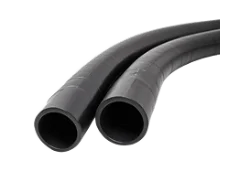
A rubber hose is a flexible tube built from rubber or synthetic rubber compounds that carries liquids or gases between two points in a system. A flexible rubber hose bends around fittings and equipment without kinking or collapsing, while a custom rubber hose is manufactured to a specific diameter, length, and reinforcement layer for a single application. Reinforcement layers, braided textile, spiral wire, or helical wire set the pressure rating and burst strength of the hose.
Types of Rubber Hoses Rubber Xperts Provides
Rubber Xperts manufactures eight rubber hose types, each built from a specific base compound for a defined temperature range, pressure rating, and chemical resistance profile.
EPDM Rubber Hoses
EPDM rubber hoses are built from ethylene propylene diene monomer rubber, a compound that resists ozone, steam, and outdoor weathering better than most general-purpose hose materials. For irrigation lines, washdown equipment, and potable water transfer exposed to the elements, EPDM rubber hoses stay flexible and leak-free through repeated seasonal temperature swings.
- Applications: Irrigation and outdoor water lines, washdown equipment, potable water systems, general-purpose fluid transfer
- Materials: EPDM (ethylene propylene diene monomer)
- Temperature Resistance: -40°C to 150°C
- Working Pressure: 100 – 250 PSI
- Sizing: 1/4"- 4" ID, standard and custom lengths available
Nitrile Rubber Hoses (NBR)
Nitrile rubber hoses are molded from NBR, an elastomer built to resist petroleum oils, fuels, and hydraulic fluids that would swell or degrade a standard rubber compound. For fuel delivery lines, hydraulic power units, and industrial lubrication systems, NBR rubber hoses hold their seal under continuous oil and fuel contact without breaking down.
- Applications: Fuel delivery systems, hydraulic power units, industrial lubrication lines, automotive fluid transfer
- Materials: Nitrile (NBR – nitrile butadiene rubber)
- Temperature Resistance: -40°C to 121°C
- Working Pressure: 150– 300 PSI
- Sizing: 1/4"– 3" ID, standard and custom lengths available
Silicone Rubber Hoses
Silicone rubber hoses are molded from VMQ elastomer prized for holding flexibility across an unusually wide temperature range while remaining safe for food-contact and high-heat use. Whether the line runs near an engine, a furnace, or a food-processing tank, silicone rubber hoses hold their shape without cracking or hardening.
- Applications: Automotive coolant systems, HVAC ducting, food and beverage processing, high-temperature air transfer
- Materials: Silicone (VMQ)
- Temperature Resistance: -51°C to 232°C
- Working Pressure: 50 –150 PSI
- Sizing: 1/4"– 4" ID, standard and custom lengths available

Viton Fluoroelastomer Hoses
Viton fluoroelastomer hoses are manufactured from a fluoroelastomer compound engineered to resist fuels, oils, and aggressive chemicals that break down standard rubber while still holding up under sustained heat. For chemical processing lines and aerospace fuel systems facing both heat and chemical exposure at once, Viton hoses resist degradation where NBR alone would fail.
- Applications: Chemical processing, aerospace fuel systems, solvent and acid transfer, high-heat industrial lines
- Materials: Viton® (FKM – fluoroelastomer)
- Temperature Resistance: -23°C to 204°C
- Working Pressure: 150 – 300 PSI
- Sizing: 1/4"– 2" ID, standard and custom lengths available
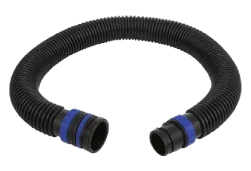
Neoprene Rubber Hoses
Neoprene rubber hoses, made from chloroprene rubber, balance moderate chemical resistance with solid weathering and flame resistance, making them a dependable general-industrial choice. Neoprene rubber hoses withstand exposure to a mix of everyday chemicals and outdoor conditions for refrigerant hose and equipment without a premium-compound price tag.
- Applications: Refrigeration systems, general industrial equipment, outdoor installations, mild acid transfer
- Materials: Neoprene (CR – chloroprene rubber)
- Temperature Resistance: -40°C to 149°C
- Working Pressure: 100 – 250 PSI
- Sizing: 1/4" – 3" ID, standard and custom lengths available
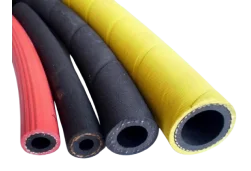
Reinforced Industrial Rubber Hoses
Reinforced industrial rubber hoses add one or more layers of braided or spiral textile or wire between the inner tube and outer cover, raising the burst pressure well above what the base rubber alone could hold. For construction and manufacturing equipment moving air, water, and abrasive slurry under daily hard use, reinforced industrial hoses keep their shape and pressure rating where a lighter hose would wear through.
- Applications: Construction equipment, manufacturing floors, abrasive slurry transfer, compressed air and water lines
- Materials: EPDM/NBR blend with multi-ply textile or wire reinforcement
- Temperature Resistance: -40°C to 121°C
- Working Pressure: 200 – 300 PSI
- Sizing: 1/2"– 6" ID, standard and custom lengths available
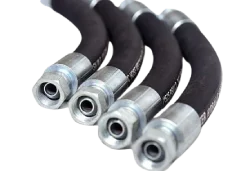
Hydraulic Rubber Hoses
Hydraulic rubber hoses reinforce the tube with spiral-wound or braided steel wire, the layer that lets them hold working pressures far above what a textile-braided hose can withstand. For pumps, valves, and actuators in heavy machinery and hydraulic power systems, hydraulic rubber hoses stay rated through constant pressure cycling instead of ballooning or bursting under load.
- Applications: Heavy machinery, hydraulic power units, construction equipment, industrial presses
- Materials: NBR/synthetic rubber with steel-wire reinforcement
- Temperature Resistance: -40°C to 121°C
- Working Pressure: 1,000 – 6,000 PSI
- Sizing: 1/4" – 2" ID, standard and custom lengths available
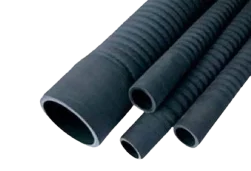
Suction Rubber Hoses
Suction rubber hoses embed a rigid helical wire directly in the hose wall, spaced tightly enough that the hose stays open under negative pressure instead of collapsing flat. For dewatering equipment, agricultural pumps, and marine bilge systems moving water, slurry, and bulk material, suction rubber hoses hold their bore open across long, dragged installations.
- Applications: Dewatering equipment, agricultural pumping, marine bilge systems, bulk material transfer
- Materials: PVC/rubber blend with rigid helical wire reinforcement
- Temperature Resistance: -29°C to 93°C
- Working Pressure: 50 – 100 PSI (vacuum-rated)
- Sizing: 1" – 8" ID, standard and custom lengths available
What Are Different Types of Hoses by Application?
Rubber Xperts groups hoses by the system they connect to, in addition to the material types listed above. Each application category below covers hoses selected for a specific pressure, media, or environment rather than a specific compound.
Hydraulic Hoses
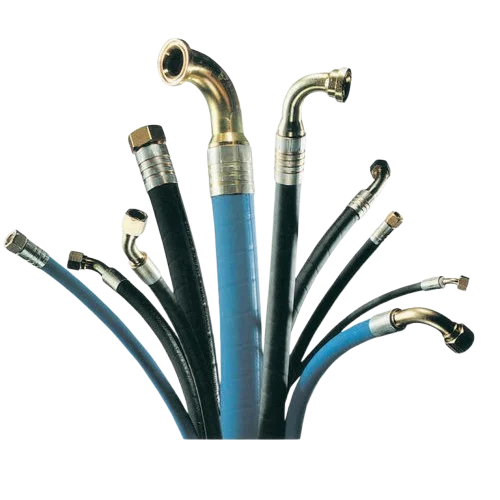
Hydraulic hoses carry pressurized fluid between pumps, cylinders, and valves in heavy machinery, construction equipment, and industrial presses. Wire-braid or wire-spiral reinforcement holds working pressures up to 6,000 PSI.
Air Hoses
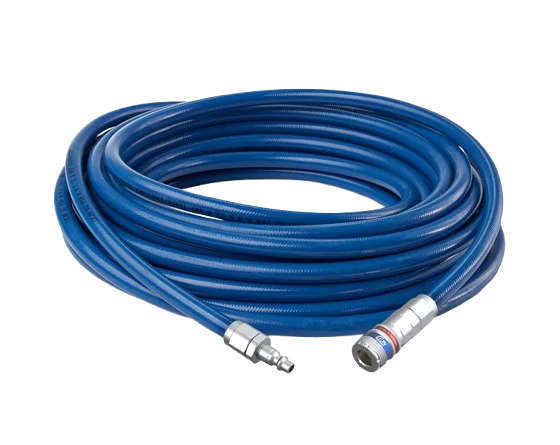
Air hoses transfer compressed air to pneumatic tools, air brakes, and control systems. Air hose walls resist ozone and abrasion from repeated coiling and dragging across job sites.
Fuel Hoses
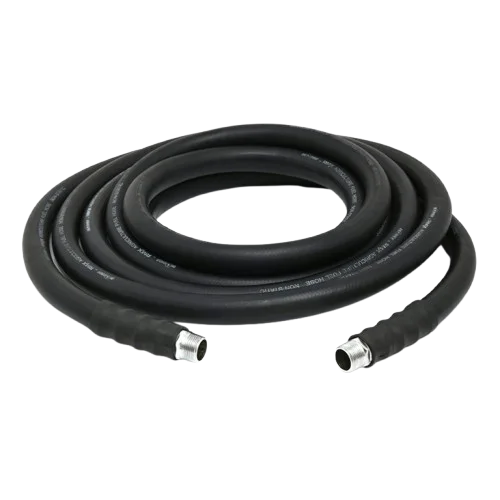
Fuel hoses transfer gasoline, diesel, and biodiesel blends in engine and fuel-delivery systems. NBR and fluoroelastomer compounds resist swelling and degradation from direct fuel contact.
Water Hoses
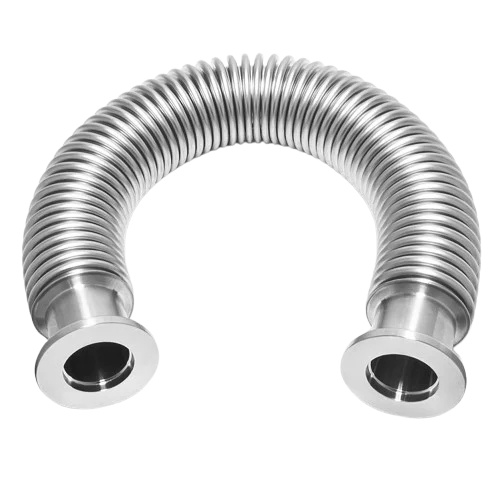
Water hoses carry potable, process, and wastewater in plumbing, irrigation, and industrial washdown systems. EPDM construction resists chlorine and UV exposure in outdoor water lines.
Industrial Vacuum Hoses
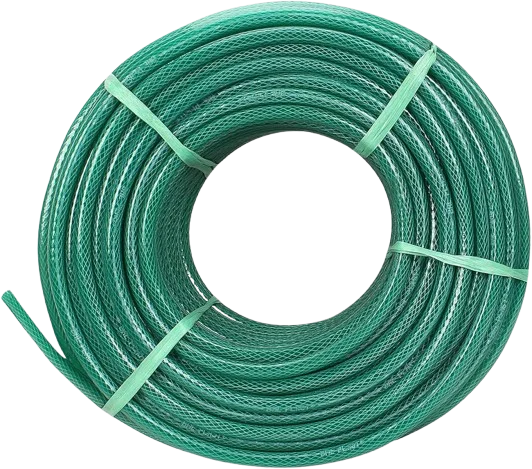
Industrial vacuum hoses move air, dust, and bulk material under negative pressure in dust collection and material-handling systems. A helical wire reinforcement holds the hose open under vacuum instead of collapsing.
Chemical-Resistant Hoses
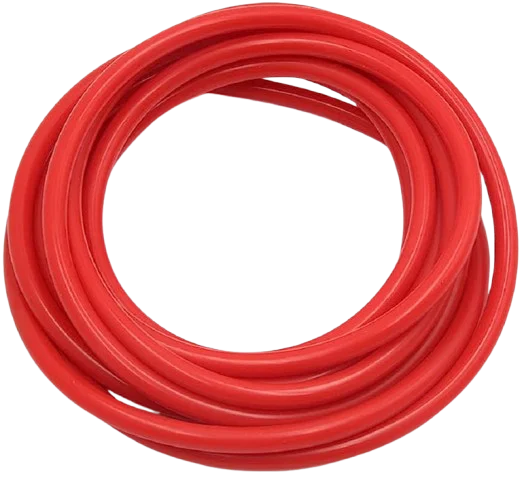
Chemical-resistant hoses transfer acids, solvents, and caustic solutions in chemical processing and pharmaceutical manufacturing. Viton and specialty NBR linings prevent the fluid from degrading the hose wall from the inside out.
What Materials Are Used to Make Rubber Hoses?
Rubber Hose Material Comparison Table
The rubber hose material comparison table is shown below.
| Material | Temperature Range | Resistance | Applications |
|---|---|---|---|
| EPDM | -40°F to 300°F | Ozone, weathering, steam | Water, outdoor, washdown |
| NBR (Nitrile) | -40°F to 250°F | Oils, fuels, hydraulic fluids | Fuel lines, automotive |
| Silicone | -60°F to 450°F | High heat, food-contact | HVAC, food processing |
| Viton® | -10°F to 400°F | Fuels, acids, solvents | Chemical processing |
| Neoprene | -40°F to 300°F | Weathering, mild chemicals, flame | Refrigerants, general industrial |
The same compound selection applies to gasket materials: a hose and a gasket built from the same base rubber share the same temperature and chemical resistance limits, so matching hose and gasket material within one system prevents the weaker component from failing first.
How Are Rubber Hoses Different from Rubber Pipes?
A rubber hose flexes to route fluid around bends, moving parts, and vibration sources. A rubber pipe holds a fixed shape and runs in a straight or preformed path. Hoses connect two points that move relative to each other or that require field-cut length adjustments. Pipes carry fluid through a permanent, unchanging run, typically at higher wall thickness and lower flex cycles than a hose is rated for.
How to Choose the Right Rubber Hose?
Choosing the appropriate rubber hose for a specific application involves careful consideration of several key factors that ensure optimal performance and longevity.
Operating Temperature
Match the hose material's rated temperature range to the highest and lowest temperatures the hose will contact, including ambient conditions, not just the fluid temperature. A hose rated below the fluid's actual operating temperature hardens, cracks, or fails at the fitting first.
Pressure Requirements
Select a reinforcement layer of braided textile, spiral wire, or braided wire rated above the system's maximum working pressure, including pressure spikes from pump start-up or valve closure. The hose's burst pressure rating runs at 4:1 over its working pressure rating as a standard safety margin.
Chemical/Fluid Compatibility
Match the hose's inner tube compound to the specific fluid it carries: NBR and Viton resist oils and fuels; EPDM does not. Contact with an incompatible fluid swells, softens, or dissolves the inner tube from the inside, a failure mode that shows no external sign until the hose bursts.
Flexibility Needs
Set the hose's minimum bend radius below the tightest turn the installation requires. A hose bent past its rated radius kinks, restricting flow and creating a stress point that fails under repeated pressure cycling.
Certifications & Compliance
Confirm the hose carries the certification the application requires: FDA or NSF for food and potable water contact, SAE for automotive fuel and hydraulic lines, or MSHA for underground mining use. Using an uncertified hose in a regulated application voids compliance for the system it's installed in, regardless of the hose's actual performance.
Frequently Asked Questions About Rubber Hoses
Here are some frequently asked questions about Rubber Hoses to help you find the answers you need:
The difference between hydraulic hoses and industrial hoses is in their design, pressure rating, and application. Hydraulic hoses are built to handle extremely high pressures in fluid power systems, while industrial hoses are made for general fluid or material transfer in manufacturing, automotive, and commercial uses.
Yes, rubber hoses can handle both hot and cold fluids. Depending on the material, they operate effectively across a temperature range of –40°C to 250°C, making them suitable for diverse applications.
Rubber hoses last 3-5 years in continuous use, depending on the application and environment. Their lifespan is influenced by durability, working pressure, and chemical exposure, and following a proper replacement cycle ensures safe and reliable performance.
Yes, rubber hoses are resistant to a wide range of chemicals and fuels when manufactured from the correct material. Options like NBR and Viton provide strong chemical compatibility, ensuring safe and reliable transfer in demanding applications.
Yes, you can order custom-sized rubber hoses tailored to your exact application. Rubber Xperts Inc. provides customization in diameter, length, material, and fittings to meet precise system requirements.
You can buy rubber hoses near you through industrial suppliers, hardware distributors, and OEM manufacturers. For guaranteed quality, certified materials, and bulk or custom supply, order directly from Rubber Xperts Inc., your trusted source for industrial, automotive, and commercial hoses.
Yes, rubber hoses are generally better than plastic for durability, flexibility, and pressure resistance. While plastic may be cheaper, rubber offers longer service life and superior performance in demanding applications.
Yes, Rubber Xperts offers bulk and OEM rubber hose supply for manufacturing projects. We have the capacity for large-scale production, delivering hoses that meet strict industry compliance standards for automotive, industrial, and commercial applications. For customized dimensions, specialized materials, or OEM branding, contact our team for tailored OEM rubber hose solutions.
You measure the correct rubber hose size by checking the inner diameter of the hose, ensuring it matches the system fitting for proper flow and seal. Always account for tolerance and confirm the outer diameter to ensure compatibility with clamps and couplings during installation.
Yes, rubber hoses can be used for high-temperature applications. Materials like Silicone and EPDM provide strong heat resistance and thermal stability, with operating ranges up to 200°C–250°C, making them ideal for demanding environments.
Rubber hoses should be replaced every 3–5 years, depending on the application and working environment. Regular inspections help track lifespan, detect early signs of wear, and ensure proper maintenance for safe, uninterrupted operation.
Yes, you can order custom rubber seals made to meet ISO 1436, SAE J517, and other ASTM standards. Rubber Xperts also provides FDA-approved and ROHS-compliant seals with verified PSI ratings for regulated industries.
Yes, rubber hoses require proper storage to extend their shelf life and prevent degradation. Keep them in a cool, dry environment, away from UV light, ozone exposure, and avoid tight bending or stacking that can damage the hose structure.
Yes, there are rubber hoses designed with UV resistance and ozone protection for outdoor and marine-grade applications. Materials like EPDM and Neoprene provide excellent durability in sunlight, saltwater, and harsh weather conditions.
Yes, rubber hoses can handle high temperatures when made from the right materials. Silicone and Viton hoses provide excellent thermal stability, operating safely up to 200°C-250°C, making them suitable for extreme heat applications in automotive, industrial, and chemical systems.
Need Custom Hoses for Your Application?
Tell us your size, material, quantity or application requirements and our team will provide a competitive quote.
Materials
Manufacturing
& Fast Response
You can upload it with your enquiry.